 Skip to content

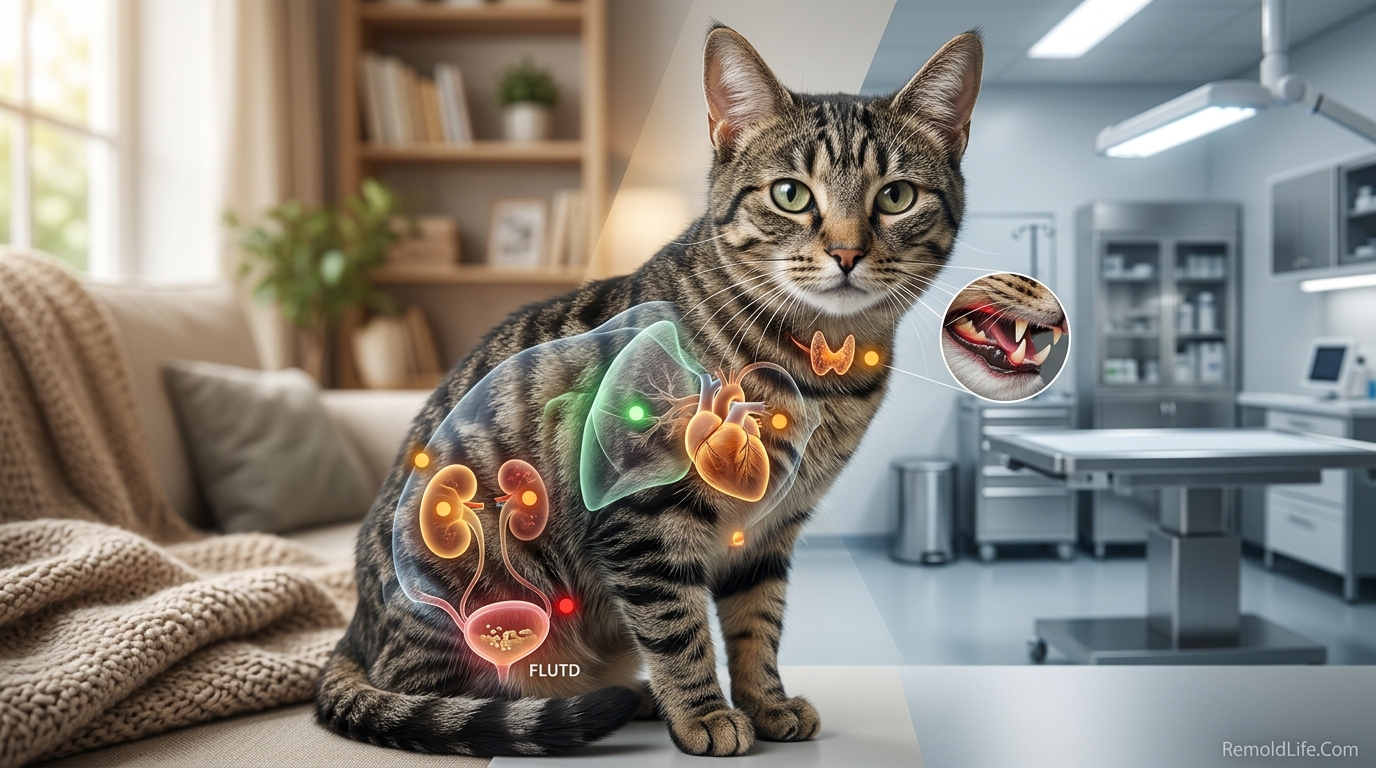

Understanding common cat health problems is one of the most important things a cat owner can know — because cats are notoriously good at hiding illness. Unlike dogs, which often show obvious signs of distress, cats instinctively conceal weakness. In the wild, showing vulnerability invites predators. That survival instinct means your cat may be significantly unwell before you notice anything is wrong.
Knowing what to watch for — and understanding which symptoms require immediate attention versus watchful waiting — makes a genuine difference in outcomes. Caught early, most feline health conditions are treatable. Left undetected, many become serious quickly.
1. Urinary Tract Disease (FLUTD)
Feline Lower Urinary Tract Disease (FLUTD) is one of the most common reasons cats visit veterinarians. It encompasses a range of conditions affecting the bladder and urethra — including bladder stones, infections, inflammation, and urethral blockage.
Symptoms to watch for:
- Straining to urinate with little or no output
- Frequent trips to the litter box with small amounts of urine
- Crying or vocalizing while using the litter box
- Blood in urine (pink-tinged or red)
- Urinating outside the litter box (often on cool surfaces like tile)
- Licking the genital area excessively
- Lethargy or loss of appetite
Why urethral blockage is an emergency: Male cats are at particular risk of urethral blockage — a life-threatening condition where the urethra is completely obstructed. A blocked male cat cannot urinate at all. Toxins rapidly accumulate in the bloodstream, and without emergency veterinary treatment within 24–48 hours, it is fatal. If your male cat is straining without producing urine and crying, this is an immediate emergency — go to an emergency vet now.
The American Veterinary Medical Association notes that stress, diet (particularly dry food-only diets), insufficient water intake, and indoor sedentary lifestyle are all contributing factors to FLUTD. Increasing water intake through wet food or a water fountain reduces risk significantly.
2. Chronic Kidney Disease (CKD)
Chronic kidney disease is the leading cause of death in older cats, affecting an estimated 30–40% of cats over age 10 according to the Cornell Feline Health Center. It develops gradually as kidney function declines over months or years.
Symptoms:
- Increased thirst and urination (early stage)
- Weight loss despite eating
- Decreased appetite
- Vomiting and nausea
- Lethargy and weakness
- Poor coat quality
- Bad breath with ammonia or chemical odor (late stage)
- Hiding more than usual
Why early detection matters: CKD cannot be reversed, but its progression can be significantly slowed with dietary management and supportive care when caught early. Annual bloodwork for cats over age 7 (biannual for over 10) includes kidney values (BUN, creatinine, SDMA) that detect CKD before symptoms appear. This is one of the clearest arguments for regular wellness exams in older cats.

3. Dental Disease
Dental disease affects an estimated 70–80% of cats over age 3, according to the American Veterinary Dental Society. It’s the most prevalent health problem in cats — and one of the most underaddressed by owners because it’s not visible without looking inside the mouth.
Symptoms:
- Bad breath (halitosis) — the most common early sign
- Drooling more than usual
- Pawing at the mouth or face
- Difficulty eating — dropping food, chewing on one side, eating more slowly
- Reduced appetite
- Red, swollen, or bleeding gums when you look in the mouth
- Yellow or brown tartar buildup on teeth
Why it matters beyond the mouth: Dental bacteria enter the bloodstream and can affect the heart, kidneys, and liver. Cats with severe untreated dental disease have higher rates of kidney and heart complications.
Management: Professional cleaning under anesthesia (the only way to properly clean below the gumline) combined with at-home brushing or dental treats (VOHC-approved) significantly reduces disease progression.
4. Hyperthyroidism
Hyperthyroidism — overproduction of thyroid hormone — is the most common hormonal disorder in cats and affects primarily middle-aged to senior cats. The thyroid gland becomes enlarged (usually due to a benign tumor) and produces excess thyroid hormone, causing the metabolism to run at abnormally high speed.
Symptoms:
- Weight loss despite increased or ravenous appetite
- Increased thirst and urination
- Hyperactivity, restlessness, or personality change (more vocal, anxious)
- Vomiting and diarrhea
- Unkempt coat
- Rapid or irregular heartbeat
- Increased heart rate felt when holding the cat
Why it matters: Untreated hyperthyroidism causes significant cardiovascular stress — hypertensive heart disease, cardiac enlargement, and eventual heart failure. It also damages kidneys. The good news: hyperthyroidism is highly treatable with medication (methimazole), radioactive iodine therapy, or surgery — and treatment outcomes are generally excellent when started early.
5. Diabetes Mellitus
Feline diabetes occurs when the pancreas doesn’t produce enough insulin or cells become insulin resistant, resulting in chronically elevated blood glucose. Obesity is a major risk factor — overweight cats are significantly more likely to develop diabetes.
Symptoms:
- Increased thirst (polydipsia)
- Increased urination (polyuria)
- Weight loss despite normal or increased appetite
- Weakness or plantigrade stance (walking flat-footed on hocks rather than on paws)
- Lethargy
- Poor coat condition
Important: Unlike in humans, diabetes in cats can sometimes go into remission with proper management — particularly when caught early, weight is reduced, and high-protein/low-carbohydrate diet is implemented. Regular blood glucose monitoring and insulin therapy (if needed) are managed in partnership with your vet.
6. Respiratory Infections (Upper Respiratory Infections / URI)
Upper respiratory infections in cats — commonly called “cat colds” — are extremely common, particularly in cats who were previously in shelters or multi-cat environments. Most are caused by feline herpesvirus (FHV-1) and feline calicivirus, both of which are highly contagious between cats.
Symptoms:
- Sneezing — sometimes frequent and violent
- Nasal discharge (clear, yellow, or green)
- Eye discharge or conjunctivitis
- Mild fever
- Reduced appetite (cats rely heavily on smell; congestion reduces appetite)
- Coughing
Timeline: Most mild URIs resolve within 1–2 weeks. Cats with FHV-1 carry the virus lifelong and may have periodic flare-ups during stress.
When to see a vet: If your cat stops eating entirely for more than 24 hours, has thick colored discharge, shows difficulty breathing, or seems very lethargic — see a vet. Supportive care (keeping nasal passages clear, appetite stimulants, sometimes antibiotics for secondary bacterial infections) can be important for cats who aren’t managing well on their own.

7. Obesity
Feline obesity has reached epidemic proportions. The Association for Pet Obesity Prevention estimates that approximately 60% of cats in the US are overweight or obese. This is particularly significant because obesity in cats directly contributes to diabetes, arthritis, liver disease (hepatic lipidosis), urinary disease, and reduced lifespan.
Is your cat overweight?
- From above, a healthy cat should have a visible waist
- From the side, the abdomen should tuck up slightly after the ribcage
- You should be able to feel ribs easily with light pressure but not see them prominently
- Belly pooch that sways when walking is a clear sign of excess weight
Management: Controlled caloric intake (measuring food rather than free-feeding), transition to high-protein/lower-calorie wet food, interactive play to increase activity, and regular vet weight checks. Weight loss in cats must be gradual — rapid weight loss in an obese cat can cause hepatic lipidosis (fatty liver disease), which is life-threatening.
8. Parasite Infections
Both internal and external parasites are common in cats and worth addressing preventively.
Internal parasites:
- Roundworms, tapeworms, and hookworms — common particularly in outdoor cats and kittens
- Toxoplasma — relevant for immunocompromised owners and pregnant women
- Giardia and Cryptosporidium — intestinal protozoa
Symptoms: Weight loss, diarrhea, vomiting, pot-bellied appearance (kittens), visible worm segments in stool or around the anus, scooting.
External parasites:
- Fleas — the most common; cause intense itching, hair loss, and transmit tapeworms
- Ear mites — dark debris in ears, head shaking, ear scratching
- Ticks — found on outdoor cats; regional risk depending on habitat
Prevention: Year-round flea/tick/heartworm prevention (yes, cats can get heartworm in endemic areas), regular deworming for at-risk cats, and annual fecal tests for intestinal parasites.
Key Symptoms That Always Warrant Prompt Vet Attention
| Symptom | Urgency |
|---|---|
| Straining to urinate (especially male cats) | 🔴 Emergency — go now |
| Not urinating at all | 🔴 Emergency |
| Open-mouth breathing / gasping | 🔴 Emergency |
| Collapse or inability to stand | 🔴 Emergency |
| Pale, white, or blue gums | 🔴 Emergency |
| Not eating for 24–48+ hours | 🟡 See vet within 24 hours |
| Sudden hiding or behavior change | 🟡 See vet soon |
| Vomiting more than twice in 24 hours | 🟡 See vet within 24 hours |
| Significant weight loss | 🟡 Schedule vet visit |
| Blood in stool or urine | 🟡 See vet within 24 hours |
| Sneezing and discharge lasting 5+ days | 🟢 Vet visit within a few days |
| Mild intermittent vomiting (hairball, etc.) | 🟢 Monitor, mention at next visit |
The Case for Annual Wellness Exams
Cats age faster than humans — one human year is roughly 4–5 cat years after the first two. A cat that “seems fine” at the annual exam may have early-stage kidney disease, dental disease, or hyperthyroidism that bloodwork and examination catch before symptoms appear.
Annual wellness exams for adult cats (under 7) and biannual for seniors (over 7) are among the most cost-effective investments in feline health — catching problems early is consistently cheaper and more effective than treating advanced disease.
Frequently Asked Questions
Cats hide pain instinctively. Signs of pain include: reduced activity, hiding, reluctance to jump, changes in posture (hunched back), facial tension (squinting, flattened ears, whiskers pulled back), reduced grooming or over-grooming one area, changes in vocalization, and aggression when touched in a certain area. The AAFP/IVAPM feline grimace scale is a validated tool for assessing feline pain through facial expression.
Occasional vomiting (once every week or two) can be normal, particularly in cats who eat too fast or groom heavily (hairballs). However, frequent vomiting (multiple times weekly), vomiting with weight loss, vomiting blood, or vomiting alongside other symptoms warrants a vet visit. “Cats just vomit” is not an accurate or acceptable dismissal — frequent vomiting always has a cause worth identifying.
Cats are generally considered senior at age 11 and geriatric at 15+. However, the transition to more vigilant monitoring — particularly with bloodwork — is typically recommended starting at age 7. Large changes can occur in organ function between annual exams in cats over 7, which is why biannual exams are recommended from that age.
Yes — fleas can enter on clothing, on other pets, or through window screens. Mosquitoes (which transmit heartworm) reach indoor cats. Some intestinal parasites can be brought in on shoes or clothing. Indoor cats are lower-risk but not zero-risk, which is why year-round prevention is still recommended by most veterinarians.
Loss of appetite in cats (anorexia) has many possible causes: dental pain, nausea, upper respiratory infection (inability to smell food), kidney disease, stress or environmental change, pancreatitis, or many other conditions. Because cats develop hepatic lipidosis (fatty liver) relatively quickly when not eating, a cat that hasn’t eaten for more than 24–48 hours should be seen by a vet — regardless of what you think the cause might be.

Final Thoughts
Cats are masters at appearing well when they aren’t. The most effective thing a cat owner can do is know their cat’s baseline — how much they normally eat, drink, sleep, play, and groom — and notice deviations from it. Changes in behavior are often the first sign of illness, and they’re visible to observant owners well before a veterinarian would see anything on examination.
Regular vet visits, prompt attention to changes in behavior or appetite, and year-round parasite prevention together give your cat the best chance of a long, healthy life.
For related pet care reading, how to keep a dog healthy covers the full daily care framework for dogs, and why is my cat not eating addresses one of the most common and concerning feline symptoms in detail.
Sources:
- American Veterinary Medical Association — Feline Health Guidelines: https://www.avma.org/
- Cornell Feline Health Center — Cat Health Topics: https://www.vet.cornell.edu/departments-centers-and-institutes/cornell-feline-health-center
- Association for Pet Obesity Prevention — Cat Obesity Statistics: https://petobesityprevention.org/
- American Veterinary Dental Society — Dental Disease Prevalence: https://www.avds.org/
- ASPCA — Common Cat Health Problems: https://www.aspca.org/pet-care/cat-care/