 Skip to content

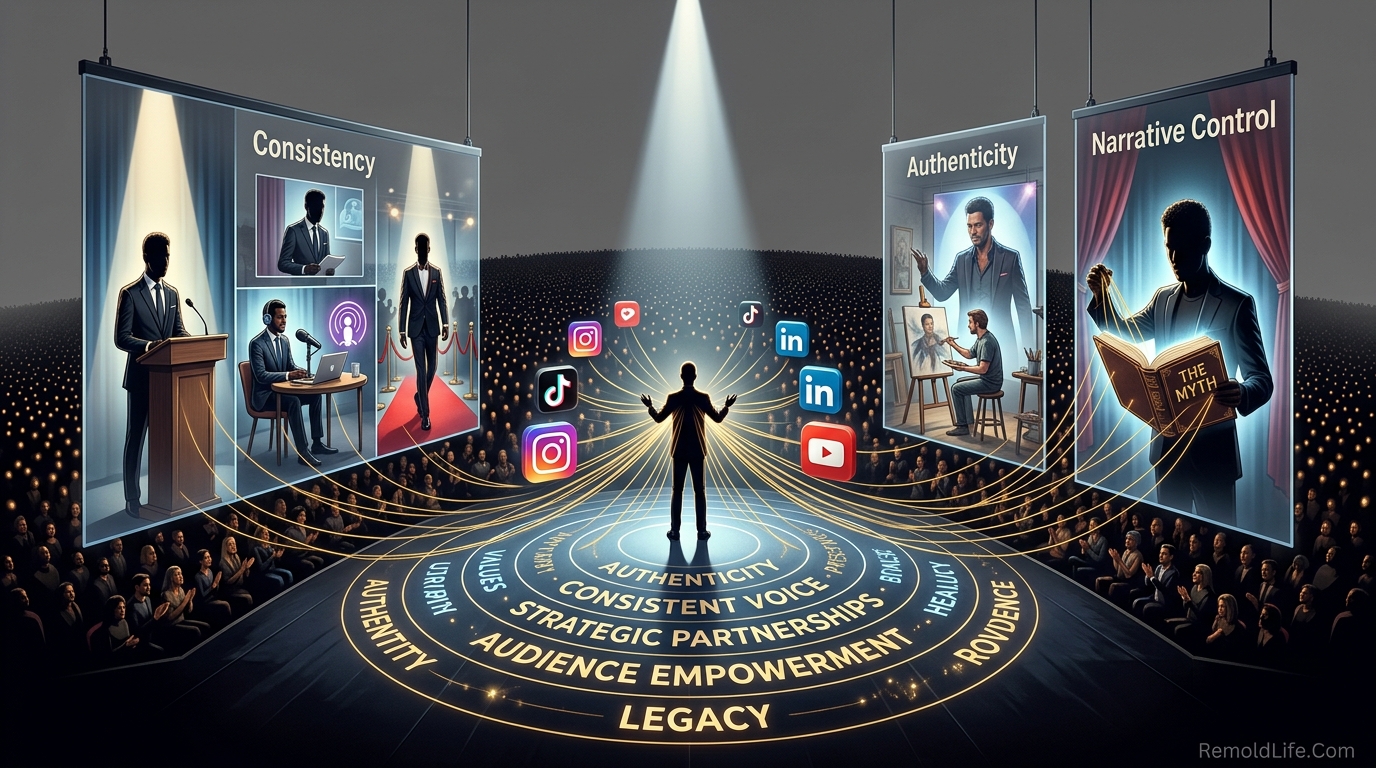

Understanding how celebrities build personal brands reveals something useful beyond the entertainment world — because the principles they use aren’t exclusive to fame. They’re principles of consistent identity, strategic communication, and audience connection that apply to anyone building a professional reputation, a career, or a public presence.
The most successful celebrity brands aren’t accidents of talent or luck. They’re the result of deliberate choices about what to stand for, who to speak to, and how to show up consistently — managed with the same care that any successful business applies to its brand.
What Is a Personal Brand, Actually?
A personal brand is the combination of associations, values, and expectations people hold about an individual — what they stand for, what they’re known for, and what experience people anticipate from engaging with them.
Everyone has a personal brand, whether they’ve thought about it or not. The difference between a deliberate personal brand and an accidental one is that the deliberate version is shaped intentionally rather than left to others to define.
For celebrities, the stakes are high — a strong brand means more box office power, higher endorsement rates, and greater career longevity. For everyday people, the stakes are professional — a clear, strong professional reputation opens doors, attracts opportunities, and creates trust.
The Core Principles Behind Successful Celebrity Branding
1. They Know Their Core Identity and Stick to It
The most enduring celebrity brands are built on a clear, consistent identity that audiences can rely on. Think about what certain celebrities are immediately associated with: advocacy, authenticity, humor, luxury, relatability, boldness. These associations didn’t happen by accident — they were cultivated through consistent messaging and choices over time.
Brand strategist David Aaker’s framework, developed at UC Berkeley, identifies brand identity as the foundational element of brand equity. Applied to celebrities: what do you want people to think of immediately when they hear your name? The answer to that question should drive every public decision.
The mistake many people make — celebrities and non-celebrities alike — is trying to be everything to everyone. The brands that work are specific, even if that specificity means some people won’t connect with them.
2. They’re Consistent Across Platforms and Contexts
A personal brand loses value when it behaves differently in different contexts without intentional reason. Celebrities who maintain strong brands show up consistently whether they’re doing a magazine interview, a social media post, a talk show appearance, or a public speech. The voice, values, and personality feel coherent.
This doesn’t mean being scripted or robotic. It means that the core identity — the values and perspective that define them — shows up regardless of format.
In practical terms: what’s your consistent voice? What do you always bring to any conversation, professional situation, or public interaction? That consistency is what makes people feel like they know you — which is the foundation of trust.

3. They Control Their Narrative Proactively
Successful celebrity brands don’t just react to what media and public opinion say about them — they actively shape the story. This happens through:
- Choosing which projects and partnerships to associate with — every association carries brand implications
- Selective disclosure — sharing certain personal details that reinforce their brand narrative while keeping others private
- Strategic timing — when and how they communicate major news
- Platform choices — which platforms they’re active on and how they use them
The lesson for non-celebrities: you shape your professional narrative through what you choose to share, what you align with, and how you frame your story. Leaving this entirely to others is ceding control of your reputation.
4. They Build Authentic Connection With Their Audience
“Authenticity” is an overused word in branding, but it points at something real. Celebrity brands that feel genuine — where the public persona seems connected to a real person rather than a crafted performance — build more durable audience loyalty.
Research by marketing professor Jennifer Aaker at Stanford found that brand authenticity is one of the strongest predictors of consumer preference and long-term loyalty. This applies directly to personal brands — people can usually tell when they’re being performed at rather than genuinely engaged with.
What does authenticity mean practically? Sharing real perspectives, including imperfect ones. Acknowledging mistakes rather than pretending they didn’t happen. Being consistent between private and public behavior — so the brand doesn’t feel like a mask.
5. They Leverage Social Media as a Direct Communication Channel
Social media changed celebrity branding fundamentally — for the first time, celebrities could speak directly to audiences without going through media intermediaries. The most brand-conscious celebrities use this deliberately.
They don’t just post content — they use their platforms to reinforce specific aspects of their brand identity. Someone known for environmental advocacy posts consistently about sustainability. Someone known for behind-the-scenes access gives genuine looks at their process. Someone known for humor finds the comedy in ordinary situations.
The strategic element: every piece of content should be asking “does this reinforce who I want to be known as?” rather than simply “is this interesting?”

Case Studies: How Specific Celebrity Brands Were Built
The Relatability Brand
Some celebrities have built enormous brands specifically around being relatable — the person who feels like a normal, approachable human despite their success. This brand identity is carefully maintained through:
- Candid sharing of ordinary moments (cooking, parenting struggles, awkward situations)
- Self-deprecating humor that undercuts any sense of superiority
- Consistent acknowledgment of imperfection
The challenge with relatability brands: they require genuinely ordinary behavior to maintain — which becomes harder as wealth and fame increase. The celebrities who do it well are usually those for whom the relatable identity is genuinely true, not performed.
The Values-Led Brand
Some of the most enduring celebrity brands are organized around clear, consistent advocacy for specific values — environmental causes, social justice, mental health awareness, or other issues. This brand type creates deep connection with audiences who share those values and tends to survive entertainment industry cycles better than brands based purely on talent or looks.
The key: the values have to be genuine and consistently demonstrated through actual choices, not just statements. Audiences are quick to identify when stated values don’t match observed behavior.
The Expert or Authority Brand
A growing category of celebrity personal brand is the expert — someone who is famous specifically for deep knowledge and credibility in a particular area. This is common in business (Elon Musk’s association with technology disruption), cooking (chef-celebrities), fitness, and wellness.
These brands require genuine expertise as their foundation — which is what makes them durable. You can manufacture a lot of celebrity elements, but you can’t fake genuine expertise indefinitely.

What Everyday People Can Apply Right Now
The principles above aren’t reserved for celebrities. They apply to anyone building a professional reputation:
Identify your specific value proposition. What do you want to be known for professionally? Pick one to three things rather than trying to be broadly impressive. Specific is memorable; generic is forgettable.
Be consistent in how you show up. Whether it’s in email communication, professional meetings, or on LinkedIn — a consistent voice and perspective builds recognition and trust over time.
Share your expertise publicly. Writing a professional blog, posting LinkedIn content about your field, speaking at industry events — these are the non-celebrity equivalents of celebrity content strategy. They build professional brand equity over time.
Choose your associations deliberately. The projects, companies, and causes you publicly associate with shape how people perceive you. Every major association is a brand signal.
Manage your online presence. What does a Google search of your name reveal? This is your brand’s first impression for many people. Auditing and shaping it isn’t vanity — it’s professional hygiene.
The Limits of Personal Branding
Worth acknowledging: personal branding can be overdone. A person who is constantly managing their “brand” in every interaction loses authenticity and becomes exhausting to engage with. The goal is a genuine professional identity that you’re intentional about — not a performance that replaces genuine human engagement.
The most effective personal brands are those where the brand identity and the actual person are well-aligned — where the public version is a consistent, intentional expression of who the person genuinely is, not a fabricated persona. That alignment is what makes them feel real and generates genuine trust.
Frequently Asked Questions
Personal branding is not inherently extroversion-dependent. Written content, professional reputation built through deep expertise, and consistent online presence can all build a strong personal brand without requiring high-visibility social performance. Many influential professional brands are built by people who communicate primarily through writing or work quality rather than speaking or social media.
Meaningful professional brand recognition typically takes two to five years of consistent, intentional effort. Social media has accelerated this timeline for some, but durable brand equity is built over time through consistent demonstration of value — not overnight viral moments. Viral fame and a strong personal brand are different things.
Usually not entirely. Established celebrities typically have teams — publicists, managers, social media managers, brand consultants — managing different aspects of their brand. Early in careers, more of it is self-managed. The principles remain the same regardless of team size.
Trying to appeal to everyone. A brand that tries to be everything to everyone has no clear identity and builds no deep loyalty. Specificity — knowing your audience, your perspective, your value — is what makes a personal brand actually work.
No. Mid-career is often an ideal time — you have genuine expertise, a track record, and clarity about what you value that younger people are still developing. The challenge isn’t starting later; it’s being intentional about what you want your professional identity to stand for from this point forward.

Final Thoughts
Celebrity personal branding is interesting partly because it happens at high visibility and high stakes — which makes the principles more visible than they would be at lower levels. But strip away the fame, the publicists, and the platform scale, and the underlying principles are genuinely applicable to anyone who cares about their professional reputation.
Know what you stand for. Be consistent. Share your expertise. Choose your associations deliberately. Build genuine connection rather than performing one.
These aren’t celebrity secrets — they’re the basics of building a reputation that lasts.
For related content, how streaming changed Hollywood provides context on how the entertainment industry shapes the platforms celebrities use to build these brands, and how fame affects mental health explores the personal cost of high-visibility public identities.
Sources:
- Aaker D — Brand Equity Framework, UC Berkeley Haas School of Business
- Aaker JL — Brand Authenticity and Consumer Preference, Stanford Graduate School of Business
- Montoya P, Vandehey T — The Brand Called You (2003)
- LinkedIn Economic Graph — Personal Branding and Career Outcomes Research: https://economicgraph.linkedin.com/
- Harvard Business Review — Personal Branding Research: https://hbr.org/
- American Marketing Association — Brand Identity Research: https://www.ama.org/