 Skip to content

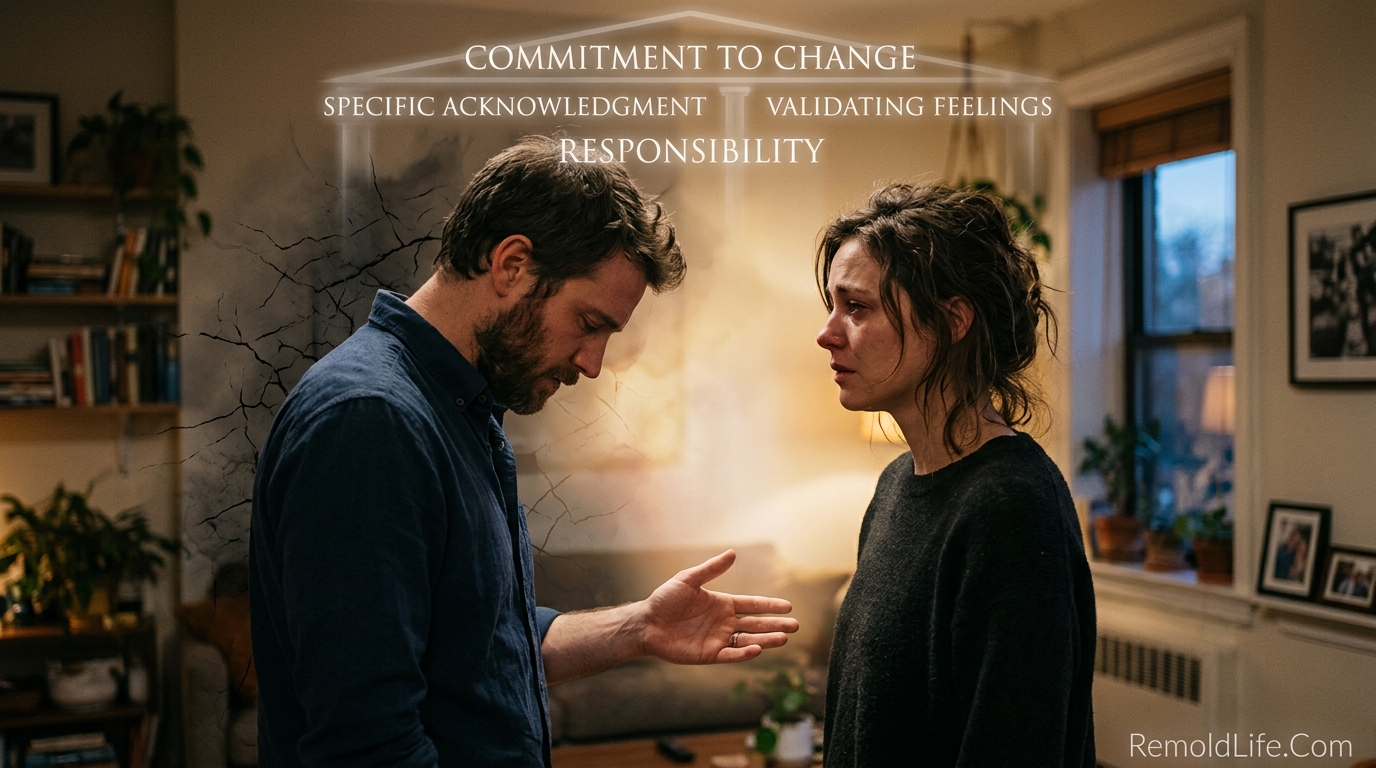

Knowing how to apologize sincerely is one of the most undervalued relationship skills there is. Most people think they know how to apologize — but the apologies that actually repair relationships are structurally different from the ones most of us learned to give.
A real apology isn’t just saying “I’m sorry.” It’s a specific communication that acknowledges what happened, takes genuine responsibility, demonstrates understanding of the impact, and signals meaningful change. When those elements are present, an apology can repair serious damage. When they’re absent — even if the words sound right — the apology tends to leave the other person feeling worse.
Why Most Apologies Don’t Work
Before covering what a sincere apology looks like, it’s worth understanding why most fail.
“I’m sorry you feel that way” — this is an apology that isn’t one. It acknowledges the other person’s emotion while implying their feeling is the problem, not your action.
“I’m sorry, but…” — anything after “but” cancels the apology. The “but” signals that you’re about to justify the behavior, which tells the other person you don’t really think you were wrong.
“I’m sorry if I hurt you” — the “if” introduces doubt about whether harm even occurred, which feels dismissive to someone who definitely was hurt.
Apologizing too quickly — an apology delivered in the first heated moment of a conflict, before you’ve actually understood what happened, is usually more about ending the discomfort of the confrontation than genuine accountability.
Apologizing repeatedly without change — apologizing for the same behavior repeatedly — without changing it — trains the other person to see your apologies as ritual rather than meaningful.
Research by Dr. Roy Lewicki at Ohio State University found that what people most want from an apology is acknowledgment of responsibility and assurance of future change. Expressions of regret and offers of repair also matter — but the credibility of an apology depends on genuine accountability.

The Six Components of a Complete Apology
A 2016 study by Lewicki and colleagues published in Negotiation and Conflict Management Research identified six components that appear in effective apologies:
| Component | Example Phrase | Importance |
|---|---|---|
| Expression of regret | “I’m truly sorry” | Foundation — but not enough alone |
| Explanation of what went wrong | “I was dismissive when you needed support” | Shows you understand the specific harm |
| Acknowledgment of responsibility | “That was my fault — I should have handled it differently” | The most critical component |
| Declaration of repentance | “I’m genuinely ashamed of how I acted” | Emotional accountability |
| Offer of repair | “Is there anything I can do to make this right?” | Action-oriented |
| Request for forgiveness | “I understand if you need time, but I hope we can move forward” | Respectful, not demanding |
The research found that acknowledgment of responsibility was the single most important component. Expressions of regret alone — even heartfelt ones — were significantly less effective than regret combined with clear acceptance of responsibility.
A Step-by-Step Framework for a Sincere Apology
Step 1: Wait Until You’re Genuinely Ready
The timing of an apology matters. Apologizing mid-conflict — before the intensity has settled — often produces apologies that are more about stopping the argument than genuine accountability.
Wait until you’ve had enough time to actually reflect on what happened, understand why it happened, and feel genuine remorse rather than just the discomfort of conflict. This might be an hour. It might be a day. It doesn’t mean avoiding the conversation — it means coming to it prepared to be accountable rather than defensive.
Step 2: Choose the Right Setting
A sincere apology deserves privacy and attention. Apologizing in passing — “hey, sorry about yesterday” while distracted by something else — communicates that the matter isn’t important enough to deserve full attention.
Choose a moment when both people can be present without distraction, when neither is rushed, and when the environment is private enough for genuine conversation.
Step 3: Name What You Did — Specifically
Vague apologies feel unsatisfying because they don’t demonstrate that you understand what actually happened.
“I’m sorry for how things went yesterday” is vague. “I’m sorry for interrupting you repeatedly in front of the group and dismissing your idea without actually hearing it” is specific. The specificity shows you paid attention, you understand the impact, and you’re not just offering a catch-all apology to move on.
Step 4: Acknowledge the Impact — Without Being Told to
This is where many apologies fall short. Taking responsibility for an action is different from acknowledging how it affected the other person. Both are necessary.
“I was wrong to say that” acknowledges the action. “I was wrong to say that — I can understand why it made you feel like your contribution doesn’t matter to me” demonstrates that you’ve thought about the experience from their perspective, not just your own.
You don’t need to claim you know exactly how they feel — that can feel presumptuous. You can acknowledge what you imagine or what they’ve expressed: “I can see why that would have hurt” or “I imagine that felt completely dismissive.”

Step 5: Take Full Responsibility — No Qualifications
This is the hardest part for most people. The impulse to explain, contextualize, or distribute responsibility is strong — particularly when there’s genuine complexity in the situation.
“I was wrong to handle it that way, and I take responsibility for that” is complete.
“I was wrong to handle it that way, but you have to understand that I was under a lot of pressure and you’ve been distant lately” immediately invalidates the apology. The context may be real — but it belongs in a separate conversation, after the apology has been received. Not attached to the end of the apology as mitigation.
Step 6: State What You’re Going to Do Differently
An apology without a commitment to change is a description of the past, not a promise about the future. What specific change is your apology backed by?
“I’m going to make sure I hear you out completely before responding, even when I disagree” is concrete. “I’ll do better” is vague enough to be meaningless.
The commitment doesn’t need to be elaborate — it needs to be specific enough that both of you can recognize whether it’s being honored.
Step 7: Give Them Space to Respond — Without Demanding Forgiveness
An apology is something you give — it’s not a transaction that obligates the other person to immediately forgive, accept, or reassure you. Some people need time. Some need to express what they went through before they’re ready to accept an apology.
After you’ve delivered the apology, stop. Let them respond in whatever way they need to. If they’re not ready to accept it — “I hear you, and I need some time” — that’s their right. Pressing for immediate forgiveness after an apology converts a moment of accountability into a moment of pressure.
How to Apologize When You Don’t Think You Were Entirely Wrong
Sometimes conflicts involve genuine mutual fault — or situations where you’re sorry for the impact of your actions even if you believe your underlying decision was right.
This is tricky but manageable. You can apologize sincerely for specific things without conceding that everything you did was wrong:
“I was wrong to raise my voice, and I’m genuinely sorry for that. I still believe my concern was valid, and I’d like to talk about that when you’re ready — but I want to separate that from how I expressed it. The way I said it was not okay.”
This separates the “how” from the “what” — acknowledging legitimate responsibility for behavior without abandoning a position that was reasonable. It’s honest and it doesn’t require pretending to feel wrong about things you don’t feel wrong about.
Apologizing in Writing vs. In Person
Both can be sincere. The choice depends on the situation and the relationship.
In person is generally better when:
- The relationship is close and ongoing
- The harm was significant — in-person accountability carries more weight
- You want to have a two-way conversation
- Tone and body language matter for full communication
In writing can be better when:
- The other person needs processing time and would feel put on the spot by an immediate in-person apology
- You struggle to express yourself verbally under pressure and are more articulate in writing
- Distance makes in-person impossible
- You want the person to have something they can return to
If writing, the same framework applies. Read it back before sending — if you notice any “but” qualifications, remove them.
Frequently Asked Questions
That’s their right. An apology creates an opportunity for repair — it doesn’t guarantee it. If someone doesn’t accept your apology, it may mean they need more time, that trust was damaged more significantly than one apology can address, or that they’ve processed the situation differently. Continue showing changed behavior over time rather than pressing for acceptance.
Yes — over-apologizing (apologizing reflexively for things that don’t warrant it, or repeatedly apologizing for the same thing without changing) reduces the meaning of each apology. Reserve sincere apologies for situations where genuine accountability is warranted.
You can acknowledge the impact of your actions without agreeing with the severity of the other person’s reaction. “I’m sorry that what I said landed that way — that wasn’t my intention” acknowledges impact without necessarily conceding that the reaction was proportionate. Whether that’s sufficient depends on the relationship and the specifics.
Old hurts can still be apologized for — and sometimes this is exactly what a relationship needs to move forward. The same framework applies. Acknowledge that you know it’s been a long time, but that you’ve reflected and want to take proper responsibility. Don’t expect an immediate resolution — old wounds need more time.
Writing an unsent letter — a detailed, honest apology to someone you can’t reach or who is deceased — serves a genuine psychological purpose. It allows you to process accountability fully, even without the possibility of direct repair. Some therapists specifically use this technique for closure around unresolvable situations.

Final Thoughts
A sincere apology is one of the more courageous acts in any relationship — because it requires setting down the protection of defensiveness and being fully accountable for what you did. Done well, it’s one of the most powerful repair tools available.
The formula isn’t complicated: be specific about what you did, acknowledge the real impact, take full responsibility without qualifications, commit to a concrete change, and give the other person space to respond on their terms.
That’s what makes an apology land — not eloquence, not elaborate gestures, not length. Honesty, specificity, and genuine accountability.
For related reading on building stronger relationship communication, how to communicate better in a relationship and how to handle conflict in a relationship cover the surrounding habits that prevent the need for as many apologies in the first place.
Sources:
- Lewicki RJ et al. — “An Exploration of the Structure of Effective Apologies.” Negotiation and Conflict Management Research (2016)
- Schumann K — “An Attempt to Clarify When Induced Perspective Taking Reduces Stereotyping.” Psychological Science (2012)
- American Psychological Association — Forgiveness and Relationship Repair Research: https://www.apa.org/
- Tavris C, Aronson E — Mistakes Were Made (But Not by Me) (2007) — Cognitive Dissonance and Accountability
- American Psychological Association — Forgiveness Research: https://www.apa.org/
- Ohio State University — Lewicki Apology Research: https://fisher.osu.edu/