 Skip to content

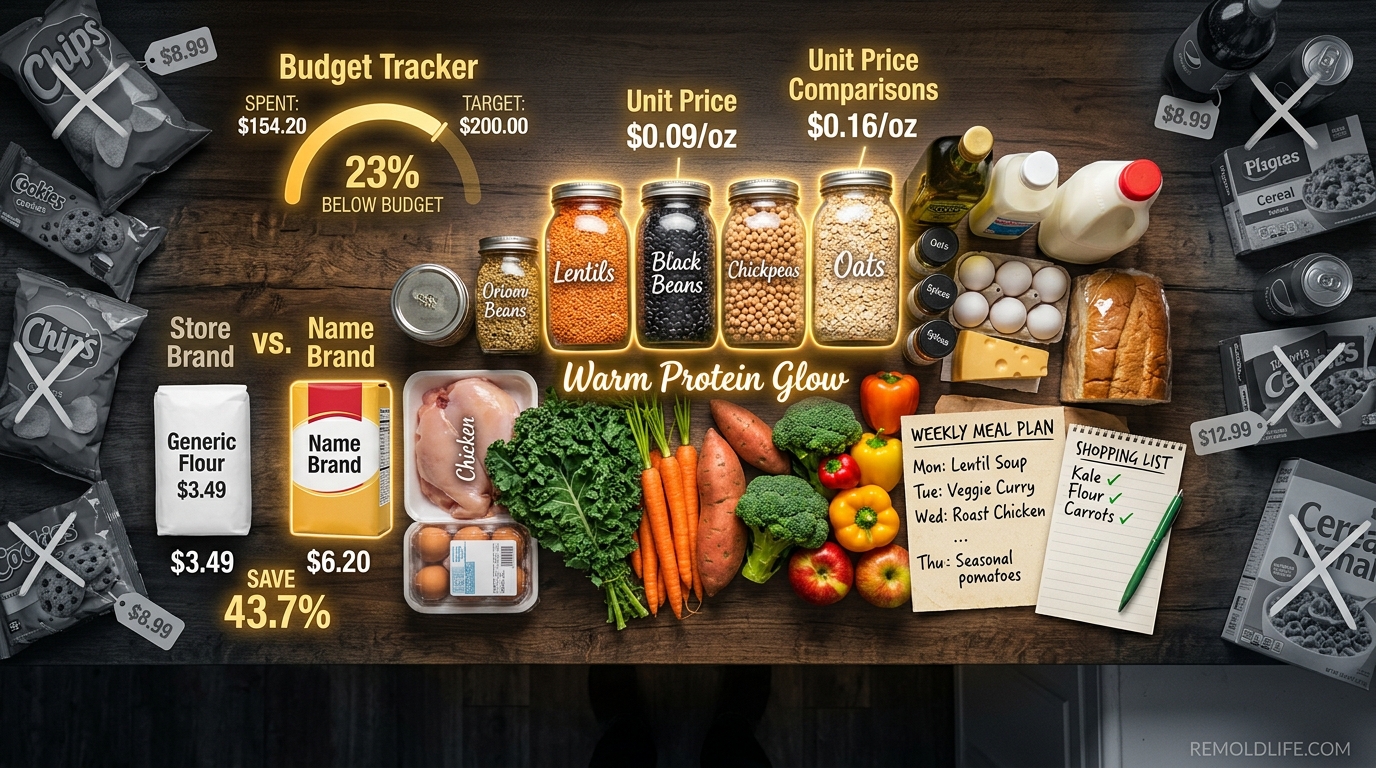

Learning how to save money on groceries is one of the most impactful budgeting skills available — because food is a significant, recurring expense that most households have more control over than they realize. According to the U.S. Bureau of Labor Statistics Consumer Expenditure Survey, food accounts for roughly 12–15% of the average American household budget, making it the third-largest expense category after housing and transportation.
Unlike fixed costs like rent or car payments, grocery spending is highly adjustable — often by 20–35% — without meaningful sacrifice to food quality or nutrition. The key is strategic planning rather than buying inferior products.
Why Grocery Bills Are Higher Than They Need to Be
Most overspending at the grocery store isn’t deliberate — it results from predictable patterns:
Shopping without a list — unplanned purchases, duplicating items already at home, and impulse buys add 20–40% to the average grocery bill according to research published in the Journal of Consumer Research.
Buying ingredients for recipes, not meals — purchasing specialty items that only serve one recipe leaves most of the package unused.
Paying for convenience — pre-cut vegetables, portioned snacks, pre-marinated meats, and ready-made salads cost significantly more than their unprocessed equivalents.
Wasting food — the USDA Economic Research Service estimates that American households waste approximately 30–40% of the food they purchase. Every wasted item represents money spent twice — once to buy it, once to replace it.
Brand loyalty without comparison — store brands and generic products are often manufactured by the same producers as name brands, with identical quality at significantly lower prices.
Understanding these patterns lets you address the actual sources of overspending rather than cutting food quality.
Strategy 1: Plan Your Meals Before You Shop
Meal planning is the single most effective grocery saving strategy — not because it’s frugal, but because it eliminates the three biggest sources of waste: unplanned purchases, unused ingredients, and last-minute takeout when there’s nothing planned for dinner.
A practical weekly meal planning approach:
- Before shopping, check what you already have — fridge, freezer, pantry
- Plan 5–6 dinners using those ingredients plus what you need to buy
- Build lunches around dinner leftovers
- Write your shopping list from the meal plan only
- Shop with the list and stay on it
This one habit alone reduces grocery spending by 15–25% for most households that implement it consistently, while simultaneously reducing food waste and takeout frequency.
Strategy 2: Master the Unit Price — Not the Package Price
The price on the shelf tag isn’t what matters — the unit price (cost per ounce, per count, per pound) is. Stores display unit prices on shelf labels, typically in small print.
Almost universally, larger packages have lower unit prices than smaller ones — but this only saves money if you’ll actually use the larger quantity before it expires. Buying in bulk works for:
- Non-perishables (rice, pasta, canned goods, dried beans, oil, vinegar)
- Items you use very frequently (coffee, oats, cleaning products)
- Frozen goods you’ll use within their freeze-stable window
Bulk buying doesn’t work for perishables you can’t consume before they spoil — a larger quantity that gets wasted costs more than the smaller package.
Store brands vs name brands: The unit price comparison matters here too. Store brand pasta at $0.06/oz versus name brand at $0.12/oz is a 50% saving on an item where the quality difference is essentially zero. The Consumer Reports research on store brands consistently finds them equal or superior to name brands in blind taste tests across most product categories.

Strategy 3: Build Meals Around Cheaper Proteins
Protein is the most expensive macronutrient per serving. The range across protein sources is enormous:
| Protein Source | Approx. Cost Per 25g Protein |
|---|---|
| Dried lentils | $0.15–0.25 |
| Eggs | $0.25–0.40 |
| Canned tuna | $0.40–0.60 |
| Dried beans | $0.20–0.35 |
| Frozen chicken thighs | $0.50–0.80 |
| Canned salmon | $0.60–0.90 |
| Chicken breast | $0.80–1.20 |
| Ground beef (80/20) | $1.00–1.50 |
| Salmon fillet | $1.50–2.50 |
| Shrimp | $1.80–3.00 |
Building 3–4 weekly meals around lentils, eggs, canned fish, and beans — while reserving more expensive proteins for 2–3 meals — significantly reduces costs without reducing nutritional quality. Legumes in particular provide protein, fiber, and micronutrients at a fraction of meat costs.
Strategy 4: Shop Seasonally and Locally
Produce prices fluctuate dramatically by season. Buying fruits and vegetables in season — when supply is high and transportation costs are lower — can reduce produce costs by 30–50% compared to buying the same items out of season.
General seasonal guide (US):
| Season | Affordable Produce |
|---|---|
| Spring | Asparagus, peas, spinach, strawberries |
| Summer | Tomatoes, zucchini, corn, berries, peppers |
| Fall | Apples, squash, sweet potatoes, Brussels sprouts |
| Winter | Root vegetables, citrus, kale, cabbage |
Frozen vegetables and fruits are an excellent and nutritionally equivalent alternative to fresh when specific items are out of season. Frozen produce is typically harvested at peak ripeness and frozen immediately — often more nutrient-dense than fresh produce that has been transported long distances.
Strategy 5: Reduce Food Waste Systematically
Cutting food waste directly increases the value of every grocery dollar spent. The EPA’s Food Recovery Hierarchy identifies household food waste reduction as a top sustainability priority — and it’s also a direct financial benefit.
Practical waste reduction:
First In, First Out (FIFO): When unpacking groceries, move older items to the front of the fridge and pantry, newer items to the back. You always reach for what’s oldest first.
The “eat the fridge” meal: Once a week, dedicate one meal to using whatever is about to expire or looks lonely in the fridge. This prevents steady accumulation of forgotten items.
Proper storage: Most produce lasts significantly longer with correct storage. Separate ethylene-producing fruits (apples, bananas, avocados) from ethylene-sensitive vegetables (leafy greens, broccoli) — ethylene gas accelerates ripening and spoilage in sensitive items.
Freeze before it spoils: Bread, meat, cheese, overripe bananas, leftover rice, and many other items freeze well. When something is close to expiring, freeze it rather than discarding.
Vegetable scrap broth: Onion skins, carrot peels, celery ends, and herb stems can be simmered into stock rather than discarded — free broth from what would otherwise be waste.

Strategy 6: Use Store Sales and Apps Strategically
Grocery stores discount items on predictable cycles — most items go on sale every 6–12 weeks. When a non-perishable you regularly use is on deep discount, buying several weeks’ worth at the sale price reduces your long-term cost.
Tools worth using:
- Grocery store apps — most major chains now offer digital coupons and personalized deals through their apps (Kroger, Target Circle, Safeway/Albertsons, Walmart+)
- Flipp — aggregates weekly flyers from multiple stores, useful for price comparing before choosing where to shop
- Ibotta — cashback on specific grocery items, usable at most major chains
- Fetch Rewards — receipt scanning app that awards points on all grocery purchases
The caveat: coupons and deals only save money if you were going to buy the item anyway. Buying something you don’t need because it’s discounted is spending money, not saving it.
Strategy 7: Cook More, Buy Processed Less
The markup on processed and convenience foods is substantial. A rough comparison:
| Item | Convenience Version | Homemade Version | Savings |
|---|---|---|---|
| Hummus (16 oz) | $4.50–6.00 | $1.00–1.50 (chickpeas + tahini) | 70% |
| Granola (12 oz) | $5.00–8.00 | $1.50–2.00 (oats + honey + nuts) | 60% |
| Salad dressing (16 oz) | $3.50–5.00 | $0.50–1.00 (oil + vinegar + seasonings) | 75% |
| Pasta sauce (24 oz) | $3.00–5.00 | $1.00–1.50 (tomatoes + seasonings) | 65% |
| Pre-cut stir-fry vegetables | $5.00/lb | $1.50–2.50/lb (whole vegetables) | 50% |
None of these require advanced cooking skill. The homemade versions often take 5–10 minutes of prep — and the homemade versions are usually nutritionally superior because they contain fewer additives, preservatives, and added sugars.
Strategy 8: Create a Grocery Budget and Track It
Without a number to aim for, grocery spending drifts upward naturally. Setting a specific weekly or monthly budget creates accountability.
A practical starting point: track your current grocery spending for one month without changing anything. That baseline tells you where you are. Then set a target 15–20% below your baseline and implement the strategies above to hit it.
For household budgeting that includes groceries as a category, how to create a monthly budget covers the full framework including sinking fund categories for food.
Frequently Asked Questions
No — many of the most nutritious foods are among the cheapest: dried beans, lentils, oats, eggs, frozen vegetables, cabbage, sweet potatoes, bananas, and canned fish. The foods that tend to be both expensive and nutritionally poor are processed convenience items. Eating well and eating affordably are not in conflict — they actually align when you cook from whole ingredients.
The USDA publishes monthly food cost plans at four spending levels. As of 2026, a family of four (two adults, two school-age children) on a “moderate-cost” plan spends approximately $1,100–$1,300/month. On a “thrifty plan,” the same family can spend approximately $700–$800/month with careful planning. These are estimates — actual costs vary by region and dietary preferences.
Generally no — unless the stores are on your regular route. The time cost and fuel cost of driving to multiple stores typically exceeds the savings for most households. Focus strategies on the store where you regularly shop rather than optimizing across multiple locations.
Yes, meaningfully — but only if you’re buying items you would have bought anyway. Most grocery loyalty programs offer 10–20% off rotating categories, personalized deals based on purchase history, and fuel discounts. Signing up for your primary store’s program is worth the two minutes it takes.
Helpful but not required. Meal prepping — cooking large batches at once — reduces weeknight impulse takeout orders and makes using fresh ingredients before they spoil easier. But the most important habit is simply having a plan before you shop, even without advance cooking.

Final Thoughts
Grocery savings don’t require deprivation — they require intentionality. A shopping list, a loose meal plan, awareness of unit prices, and strategic use of cheaper proteins together produce meaningful savings that compound month after month.
Even implementing two or three of these strategies consistently will reduce your grocery bill by 15–25% over a full year — while maintaining or improving the quality of what you eat.
For broader financial management, how to build an emergency fund and how to get out of credit card debt are the natural complements to freeing up grocery budget money for financial goals.
Sources:
- U.S. Bureau of Labor Statistics — Consumer Expenditure Survey: https://www.bls.gov/cex/
- USDA Economic Research Service — Food Expenditure Series: https://www.ers.usda.gov/
- USDA — Official Food Plans (Thrifty to Liberal): https://www.usda.gov/
- EPA — Sustainable Food Management: https://www.epa.gov/sustainable-management-food
- Consumer Reports — Store Brand vs Name Brand Research: https://www.consumerreports.org/