 Skip to content

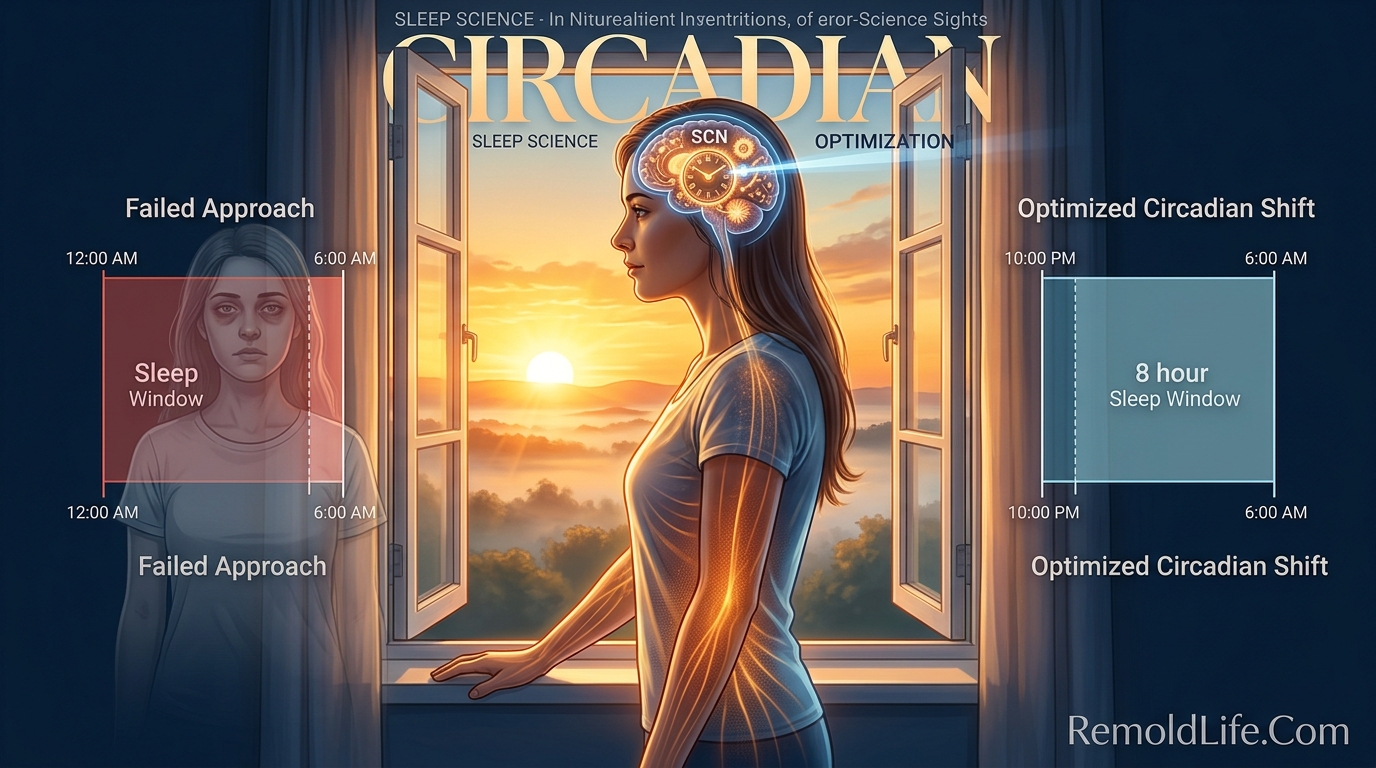

Learning how to wake up early is genuinely useful — but only if you can do it without feeling wrecked for the rest of the day. Most early-rising attempts fail not because the alarm doesn’t go off, but because the body and brain aren’t ready for the shift — and the resulting exhaustion makes the habit unsustainable.
The key insight from sleep science is this: the problem is rarely the wake-up time. It’s the bedtime. Waking up earlier without moving bedtime earlier just means sleeping less — which explains why early alarms set late at night usually fail. Sustainable early waking requires shifting the entire sleep window, not just the morning edge.
Understanding Your Chronotype Before Changing Anything
Before setting a 5am alarm, it’s worth understanding whether early rising is working with or against your biology.
Your chronotype — whether you’re naturally a morning person (“lark”), evening person (“owl”), or somewhere between — is significantly determined by genetics. Research by Dr. Till Roenneberg at Ludwig Maximilian University of Munich, involving over 500,000 participants, found that chronotype is a genuine biological trait distributed across a spectrum, not a lifestyle choice.
Evening chronotypes (natural night owls) who force themselves into extreme early schedules often experience what Roenneberg calls “social jet lag” — a chronic misalignment between their biological clock and their social/work schedule that produces symptoms similar to actual jet lag: cognitive impairment, mood disruption, and increased health risk.
This doesn’t mean night owls can never be morning people — but it means the shift needs to be gradual, strategic, and realistic. Trying to become a 5am person when you’re naturally a midnight person is a harder project than shifting from naturally 8am to 6:30am.
Why Most Early-Wake Attempts Fail
Moving the alarm without moving bedtime — as mentioned: less sleep, not earlier rising. The body simply experiences the early alarm as sleep deprivation.
The snooze trap — the 9-minute snooze cycles that feel like mercy but actually make waking harder. When you hit snooze, you often re-enter light sleep — and being yanked out of that creates sleep inertia (the groggy, disoriented feeling) that can last 30–90 minutes.
Inconsistency on weekends — sleeping until 9 or 10am on weekends after 6am weekdays causes social jet lag that makes Monday morning brutal. The inconsistency resets your circadian clock away from your target.
No compelling reason — waking early without a specific purpose waiting feels pointless when the bed is warm. Having something genuinely worth getting up for matters more than most productivity advice acknowledges.
How to Shift Your Wake Time — The Right Way
Step 1: Decide on Your Target Wake Time
Be realistic. If you currently wake at 8am and want to wake at 5am, that’s a 3-hour shift — achievable but a longer project. A more modest shift to 6:30am is faster and more sustainable.
Choose a time that’s early enough to serve your purpose (quiet work time, exercise, reading, preparation) without being so extreme that it requires heroic willpower to maintain.

Step 2: Move Bedtime First — Before Moving Wake Time
Calculate backward from your target wake time to determine your needed bedtime. Most adults need 7–9 hours.
Example:
- Target wake time: 6:00am
- Required sleep: 7.5 hours
- Target bedtime: 10:15–10:30pm
Before changing your alarm, spend one to two weeks actually achieving your target bedtime consistently. Once you’re reliably falling asleep at 10:30pm, moving the wake time to 6am produces a well-rested early riser rather than a tired one.
Step 3: Shift Gradually If Needed
If your current sleep schedule is significantly different from your target, shift in 15–20 minute increments every 2–3 days rather than jumping suddenly.
| Day | Bedtime | Wake Time |
|---|---|---|
| Current | 12:00am | 8:00am |
| Days 1–3 | 11:45pm | 7:45am |
| Days 4–6 | 11:30pm | 7:30am |
| Days 7–9 | 11:15pm | 7:15am |
| Days 10–12 | 11:00pm | 7:00am |
| Days 13–15 | 10:45pm | 6:45am |
| Days 16–18 | 10:30pm | 6:30am |
This gradual approach gives your circadian clock time to adjust with each shift rather than being forced into a sudden change.
Step 4: Get Morning Light Immediately
This is the most physiologically powerful thing you can do to reinforce an earlier wake time. Light in the first 30–60 minutes after waking sends the strongest signal to your brain that the day has started — and by extension, advances your circadian clock toward earlier.
Step outside within the first 20 minutes of waking — even on cloudy days, outdoor light significantly exceeds indoor lighting in lux. This isn’t optional motivation advice; it’s how circadian biology works. Dr. Andrew Huberman’s research at Stanford on light and circadian timing consistently identifies morning light as the most powerful circadian anchor available.
Step 5: Keep the Same Schedule 7 Days a Week
The weekend exception is what kills most early-rising habits. Your circadian clock doesn’t know it’s Saturday. Sleeping two hours later on weekends shifts your clock backward — and you pay for it Monday through Wednesday.
If you genuinely need more sleep on weekends, go to bed earlier rather than waking later. Maintain your wake time and add a brief early-afternoon nap (20 minutes maximum, before 3pm) if needed.
Step 6: Have a Reason Worth Getting Up For
The most durable early risers have a specific, compelling purpose waiting for them. Not a vague intention to “be more productive” — a specific activity they genuinely want to do before the day’s demands arrive.
- Quiet creative work (writing, a project)
- Exercise (running, gym, yoga)
- Reading with a slow coffee
- A specific learning goal
- Preparation that reduces morning rush stress
The purpose matters because it converts the alarm from an adversary into an invitation. “I get to do X” is a more sustainable motivation than “I should wake up early.”

Evening Habits That Support Early Waking
What you do in the hours before bed largely determines how easy the morning will be.
Reduce bright light after sunset — bright overhead lights and blue-wavelength screen light suppress melatonin production, pushing the sleep signal later. Dim your environment in the hour or two before your target bedtime.
Set a consistent bedtime alarm — most people set morning alarms but not bedtime reminders. A 9:30pm notification that says “wind down” helps you start the transition rather than realizing at 11pm you need to be asleep.
Prepare the night before — coffee maker set, workout clothes out, anything that removes morning friction. The less decision-making required immediately after waking, the lower the resistance to getting up.
Limit alcohol in the evening — alcohol disrupts sleep architecture and produces lighter, more fragmented sleep in the second half of the night. A night of alcohol-compromised sleep makes early waking genuinely harder and the day more difficult.
Cool your bedroom — the body’s core temperature drops to initiate sleep. A room at 65–68°F (18–20°C) supports this drop and makes falling asleep at your target bedtime easier.
What to Do When You Wake Up
The first 10–20 minutes after waking significantly determine how the morning feels. A routine that transitions smoothly from sleep to awake state makes the habit sustainable.
What works:
- Don’t reach for your phone immediately — it activates the news/social media loop before your brain is ready for it
- Drink water — you’re mildly dehydrated after sleep
- Get outdoor light as soon as possible
- Do something physical — stretching, a short walk, light exercise — to accelerate the transition from sleep inertia to alertness
- Delay caffeine 60–90 minutes after waking — this allows adenosine to clear naturally, and caffeine then produces a cleaner, longer-lasting energy effect
The alarm itself: Keep your phone or alarm across the room so getting up is required to turn it off. Once you’re standing, the activation energy to actually get up is already spent.
Frequently Asked Questions
Research does show modest health associations with morning chronotypes — lower rates of depression, lower BMI, and some mental health advantages. However, many of these associations may reflect social advantages (morning schedules align better with conventional work/school schedules) rather than biological superiority of early rising. What’s most important is adequate, regular sleep aligned with your biology — not a specific wake time.
With consistent gradual shifting and light exposure, most people feel meaningfully adjusted to a new wake time within 2–3 weeks. Full circadian entrainment — where the new schedule feels completely natural — typically takes 4–6 weeks of consistent reinforcement.
This is common when the shift is attempted too quickly. It often means the circadian clock hasn’t moved yet — which is why morning light exposure is critical. Melatonin (0.5–1mg, which is lower than most commercial doses) taken 1–2 hours before target bedtime can help advance the sleep phase during the transition. Avoid bright light in the evening rigorously during the adjustment period.
It’s possible to shift meaningfully, but the magnitude of sustainable shift is limited by your underlying chronotype. A moderate night owl can typically shift to a reasonably early morning schedule with consistent effort. An extreme night owl will always find very early schedules harder to maintain than someone with a naturally earlier chronotype. Working with your biology — even partially — produces more sustainable outcomes than fighting it completely.
For shift workers or those with genuinely late work schedules, forcing a conventional early wake time may not make sense. The goal is sleep quality and adequate duration on whatever schedule your life requires — not conforming to a “5am club” ideal. Protect your sleep window, expose yourself to light at the start of your wake period (whatever time that is), and maintain consistency within your actual schedule.

Final Thoughts
Waking up early sustainably is a sleep schedule project, not an alarm project. The alarm is the last step — not the first. Start with your bedtime, shift gradually, anchor with morning light, and have something specific and compelling to get up for.
When those pieces are in place, early rising stops feeling like punishment and starts feeling like a genuine gift to yourself — quiet time before the day’s demands arrive, when your mind is fresh and the house is still.
For related reading, how to improve sleep quality naturally covers the full sleep quality picture that makes early rising sustainable, and how to build a daily routine helps you fill that early morning time with purpose.
Sources:
- Roenneberg T et al. — “Epidemiology of the Human Circadian Clock.” Sleep Medicine Reviews (2007)
- Huberman Lab — Light and Circadian Biology Research: https://hubermanlab.com/
- National Sleep Foundation — Sleep and Chronotypes: https://www.sleepfoundation.org/
- Walker M — Why We Sleep (2017) — Circadian Biology and Chronotypes
- Phillips AJK et al. — “Irregular Sleep/Wake Patterns Are Associated with Poorer Academic Performance.” Scientific Reports (2017)