


Have you ever entered a room and said, there is something wrong with the smell of the place? The smell of those strangely old socks or forgotten left-overs may not be the only source of that odor. If you’re wondering what does mold smell like, you’re asking the right question. That musty, earthy smell could be an indication of something serious lurking behind your walls, under your floors or lurking in the corners of your bathroom.
- The Smell of Mold, Not Brass in Boz.
- MVOC Type & Odor Description
- What Does Mold Smell Like in a House?
- What Does Black Mold Smell Like?
- What Does Mold Smell Like in a Bathroom?
- Health Symptoms Associated with Mold Smell
- Why Your Nose Matters: The Science of Mold Detection
- How to Locate Mold by Smell
- Common Causes of Household Mold Smell
- Professional vs. DIY Mold Assessment
- The Cost of Ignoring Mold Smell
- Mold Remediation Cost Guide
- Mold Prevention Strategies
- Mold Testing: Is It Worth It?
- DIY Mold Cleaning Guidelines
- Effective Cleaning Solutions
- When Mold Smell Persists After Cleaning
- Legal Rights and Mold
- The Connection Between Mold and Other Health Issues
- Seasonal Considerations for Mold Smell
- Technology and Mold Detection
- Special Situations and Mold Smell
- Natural Approaches to Fresh Indoor Air
- When to Involve Medical Professionals
- The Psychological Impact of Living with Mold
- Final Thoughts on Identifying Mold by Smell
- Frequently Asked Questions
I have been assisting home owners with the detection and treatment of molds over the years. You can rely on me and I say this: you can save thousands of dollars in remediation charges when you are able to catch the mold earlier. It can also help to protect your health. Now we are going to jump into all the details of the smell of detecting mold.
The Smell of Mold, Not Brass in Boz.
Mold has a signature scent. Most people describe it as being musty. Others say it’s earthy or damp. Others have likened it to wet socks or rotting wood.
But here’s the thing. Not all mold smells the same. Different species produce different smells. The surface on which it grows is important as well. Environmental conditions are also involved.
Why Does Mold Produce Smell?
Mold releases Microbial volatile organic compounds (MVOC). These are gases created as a by-product of mould’s metabolic process. Imagine that it is the natural byproduct of mold.

When mold consume organic material it emits these chemicals. The level of MVOCs in the air is responsible for the intensity of smell. More the mold there is, the stronger the smell. Simple as that.
MVOC Type & Odor Description
The EPA has documented these compounds very well. They confirm that mold smell is indicative of mold growth. This isn’t just an annoyance. It’s a warning sign.
What Does Mold Smell Like in a House?
Let’s get specific. What does mold smell like in a house exactly? The answer depends upon location and the type of mold.

Common Descriptions from Homeowners
I have inquired of thousands of house owners how the smell is. The following are the most common responses:
- Musty and stale
- Like wet cardboard
- Similar to dirty gym clothes
- Earthy, like forest floor
- Rotting or decaying wood
- Damp basement smell
One client said it so well. The quote “It smells like my grandmother’s old closet,” was said by her. That stuck with me. It resonates with the old and overlooked nature of mold smell.
Location-Specific Smells
Different areas result in slightly different scents. This does make sense when you think about it.
The smell of the basement mold is usually more earthy. The soil contact and concrete contribute to this. The foundation walls become damp due to moisture. It is under these conditions that mold thrives.
Attic mold has a smell that is more stuffy. Poor ventilation produces stagnant air. Roof leaks are something that will go unnoticed for months. And by the time you smell it, the problem is significant.
Wall cavity mold is tricky. The smell may appear to be out of nowhere. It smells through electrical outlets. It seeps through cracks in dry-wall. You hear it but don’t know where it’s coming from.
When you have some health complications with these smells, also look into resources on best anxiety treatments because the effect of mold exposure may exacerbate anxiety symptoms.
What Does Black Mold Smell Like?
Now we are in some serious territory. what does black mold smell like? This question is constantly coming up. And for good reason.

Black mold, its scientific name is Stachybotrys chartarum, is famous. The media has made it notorious. But is it all that different from other molds?
The Real Truth about Black Mold Smell.
Here’s my honest take. Black mold has a similar smell to other molds. It’s musty, earthy and unpleasant.
However, some call it more pungent. Others say that it has a more sharp edge. The smell can be described as:
- Intensely musty
- Like rotting material that is organic
- Sharp and penetrating
- Heavy and oppressive
One thing I’ve seen from my experience. Often black mold grows at a location where the water damage is severe. Think flooding. Think major leaks. These situations are creating concentrated growth. The concentration enhances the smell.
Don’t Rely on Smell Alone
Here’s what I tell everyone. You never can tell if it is black mold just by the smell. Species are not verified by color and smell. Only laboratory testing accomplishes that.
Many molds appear black. Cladosporium. Aspergillus niger. Alternaria. These are not Stachybotrys but resemble them. Their smells overlap too.
“The presence of any mold odor should be a cause for investigation and remediation regardless of the type of mold it may be.”
CDC Guidelines
This is crucial advice. There is no point in waiting to discover the specific type of the mold. Take care of the problem right away.
What Does Mold Smell Like in a Bathroom?
Bathrooms are mold hotspots. The humidity. The poor ventilation. The organic material. It’s a perfect storm.

So what does mold smell like in a bathroom? It has its own distinct characteristics.
Bathroom-Specific Mold Odors
Bathroom mold often smells:
- Sour and damp
- Like wet towels left too long
- Mildewy and stale
- Similar to standing water
The soap scum and body oils are a food source for the mold. This can put a little bit of a sweet undertone. It’s an unusual combination. Musty yet sweet.
Common Bathroom Mold Locations
You may smell mold, before you see it. Here’s where to look:
- Behind toilets
- Under sink cabinets
- Around tub caulking
- Inside exhaust fans
- Behind shower tiles
- Under bathroom mats
I once aided in helping a homeowner who was unable to locate the source. There always was a musty smell in the bathroom. The next thing we found is the presence of mold behind the medicine cabinet. Moisture had been accumulating there for years.
If you are suffering from sleep problems and bathroom mold, you should check out 6 month sleep regression patterns and the effects of climate on sleep.
Health Symptoms Associated with Mold Smell
Let’s talk health. This matters tremendously. The smell itself is an indication of MVOC exposure. These compounds have an effect on your body.
Common Symptoms from Mold Exposure
Cytotoxic effects of mold are frequently seen in people who have been exposed to mold and they include:
- Respiratory irritation
- Persistent coughing
- Nasal congestion
- Eye irritation
- Skin rashes
- Headaches
- Fatigue
These symptoms are confirmed to be legitimate by the CDC. They’re not imagined. Mold has real people affecting real people.
Who’s Most at Risk?
Some people take to reacting more severely. This includes:
- Asthmatics
- People with allergies
- Immunocompromised individuals
- Young children
- Elderly persons
When you are pregnant and with these symptoms, it relates to the greater health issues. Check out information on how to recover from postpartum depression because environmental issues can add up mental health challenges.
My Personal Experience
I will let you know something personal here. Years ago I disregarded a musty smell in my home office. I thought it was kind of just old books.
Within months I became chronically congested. Headaches became regular. My energy plummeted. Only when I discovered that I had hidden mold, did I put the dots together.
The remediation was helpful immediately. Within weeks the symptoms improved. That experience taught me never to ignore funny smells.
Why Your Nose Matters: The Science of Mold Detection
You are a very sensitive-nosed fellow. It is able to detect mold at extremely low levels. This makes it a useful detection tool.
How Human Olfaction Works
The average person has 400 types of smell receptors. These can smell more than 1 trillion combinations of smells. Mold’s MVOCs cause certain receptor patterns.
There are sensitive and insensitive people. This is normal variation. But nearly all can detect serious growth of mold.
When Smell Becomes Unreliable
There are limitations however. Olfactory fatigue is real. Live in an environment moldy for long enough? You’re going to stop being bothered by the smell.
This occurred to a client of mine. She didn’t sense anything unusual in her house. But visitors always made comments about the musty smell. She’d become nose-blind to it.
This is why it helps to have outside perspectives. Have a friend sniff around. Their fresh nose may be able to catch what yours may miss.
How to Locate Mold by Smell
You’ve come up with a musty smell. Now what? The next step is to find the source.
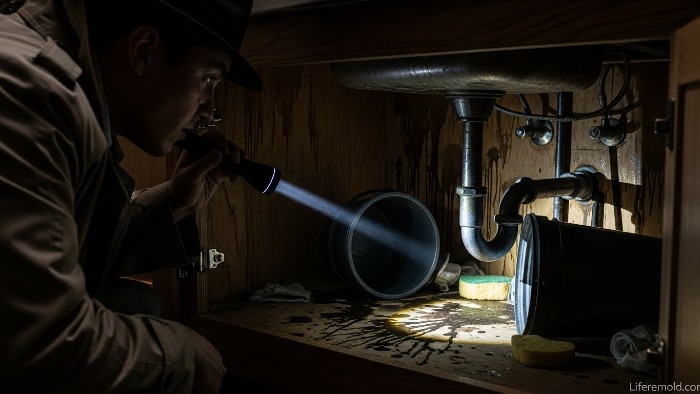
The Sniff Test Method
Here is the systematic method that I would suggest:
- 1. Start in suspect areas
- Bathrooms, basements and kitchens should be checked first. These have higher levels of moisture.
- 2. Follow your nose
- Move towards the direction that the smell is coming from. Trust your instincts.
- 3. Check hidden spaces
- Open cabinets. Look behind furniture. Inspect closets.
- 4. Examine water-prone areas
- Under sinks. Around windows. Near appliances using water ones.
- 5. Break even the most inconspicuous places.
- HVAC systems. Ductwork. Behind wallpaper. Under carpeting.
Tools That Help
Sometimes it is not only necessary to smell. Consider using:
| Tool | Purpose | Price Range |
|---|---|---|
| Moisture meter | Detects hidden water | $20-$50 |
| Thermal camera | Finds temperature variations | $200-$500 |
| Borescope | Sees inside walls | $50-$150 |
| Air quality monitor | Measures particles | $100-$300 |
These tools are used to complement your nose. They confirm suspicions. They identify specific and precise locations.
Common Causes of Household Mold Smell
Knowing the reason makes sure that it does not happen again. We will look at the key perpetrators.
Water Damage
This is number one. Hands down. Water is the cause of mold conditions.
Sources include:
- Roof leaks
- Pipe bursts
- Flooding events
- Foundation cracks
- Window condensation
Even minor leaks matter. A slow drip under the sink can result in serious mold growth in a short period of time, months.
Poor Ventilation
Stagnant air traps moisture. This is an ideal mold growing condition. This is notorious in bathrooms that lack exhaust fans.
Speaking about the morning routines and the bathrooms, you might be interested in 5 morning habits that make you tired secretly. Environmental factors such as mold can be a compounding factor to fatigue.
High Humidity
Humidity in the house exceeding 60 percent favors mold. Being in some climates, this is a constant battle.
Dehumidifiers are of tremendous help. So does in proper air conditioning. Monitoring the levels of humidity is a must in humid areas.
Organic Building Materials
Mold eats organic material. This includes:
- Drywall paper backing
- Wood framing
- Carpet padding
- Ceiling tiles
- Insulation materials
Many such materials are used in modern construction. This is a source of ample food for mold.
Professional vs. DIY Mold Assessment
Should you call the professionals or do the job yourself? This depends on a number of factors.
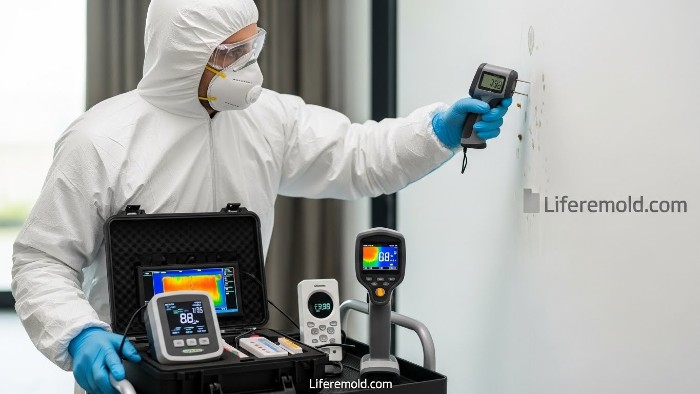
When DIY Works
Little visible spots of mould can be dealt with. The EPA recommends DIY for the area below 10 square feet. That’s roughly a 3×3 foot patch.
For these situations:
- Protective equipment: wear proper protective equipment
- Wash using fungal killing agents.
- Address the moisture source
- Monitor for recurrence
When to Call Professionals
There are certain situations where experts are required:
- Widespread mold growth
- Mold in HVAC systems
- After flooding events
- Health symptoms present
- Cannot locate source
- Remediation in the past failed
Professional mold inspectors have the special equipment. They have some training and experience. They pick up on things that you would have overlooked.
Legal Considerations
Here’s something that most don’t think much about. Documentation is important for a number of reasons.
In case you are a tenant, there are legal responsibilities of landlords. Habitable conditions are required in most states. Habitability Standards Often Mold Violates.
If you are selling a home, the disclosure laws apply. Many states mandate the disclosure of mold. Ignoring problems leads to liability.
If health effects are the case, documentation helps to back up claims. Medical records are related to home conditions. Professional Assessments: Evidence
The Cost of Ignoring Mold Smell
Some people have no time for musty smells. It is just old house smell, you see. This is a mistake with consequences.
Financial Costs
The higher the magnitude of the mold, the higher the cost of remediation:
Mold Remediation Cost Guide
Early detection saves money. Preventing big problems by working on small problems
Health Costs
There are costs from the health impacts as well. Doctor visits. Medications. Lost work time. Reduced quality of life.
Chronic exposure may cause permanent effects. Some go on to develop mold sensitivity. This results in persistent challenges in health.
If you are suffering from the associated health problems, knowing connections is helpful. For example 5 hidden causes of hair loss takes a look at the effect that environmental toxins have on your body.
Property Value Impacts
The history of mold influences house prices. Buyers conduct research about the history of properties. Mold Problems are seen in Records
And even after the remediation, the stigma persists. Full disclosure will protect you in the law. But it can affect sale price.
Mold Prevention Strategies
Prevention is the better solution than the cure. Here are proven strategies.

Control Moisture
This is foundational. Without moisture mold cannot flourish.
- Fix leaks immediately
- Exhaust fans should be used in bathrooms.
- Vent dryers outside
- Apply dehumidifiers on damp places.
- Make proper grading around foundation
Improve Ventilation
It does not encourage mould because of air movement. Stagnant air invites it.
- Open windows when possible
- Use ceiling fans
- Ensure that there are functioning HVAC systems
- Furniture should not be used to block vents.
Regarding morning routines, stop doing this 1 mistake in the morning talks about the daily habits and how they affect your environment and your health.
Regular Inspection
Problems are detected when problems are made at routine checks. Create a schedule:
- Monthly: Check under sinks, around toilets
- Quarterly: Check basement, attic, crawl spaces.
- Yearly: HVAC check-up by the professionals.
- Following storms: Graduate water intrusion.
Proper Materials
When renovating, choose wisely;
- Mold resistant drywall in areas that are wet
- Correct ventilation systems in the bathroom
- Quality caulking and grout
- Appropriate insulation
Mold Testing: Is It Worth It?
The question of mold testing is raised by many. Is it necessary? Does it help?
When Testing Makes Sense
Testing offers a value in certain circumstances:
- Health symptoms are without apparent mold.
- Legal documentation needed
- Insurance claims need to be proved
- Post-remediation verification
- Buying or selling property
When Testing Is Unnecessary
In other instances, there is no need to test:
- Mold already visible (just treat it)
- Source is obvious
- Small, manageable growth
One expert put it well. When you can see the mould, you do not need the test in order to prove the body has it. Just clean it up.”
Types of Mold Tests
There are several different methods of testing:
Air sampling takes samples of airborne spores. It measures the level of concentrations. This compares indoor to outdoor levels.
Surface sampling identifies species of materials. Swab tests/take away/take tap samples. Laboratory analysis is used to identify types of mold.
Bulk sampling is used to test pieces of material. Dry wall sections or carpet samples are sent to the laboratories. This is a confirm of growth in materials.
DIY Mold Cleaning Guidelines
In small cases of mould, self cleaning suffices. Be safe by following the due process.
Safety Equipment
Always wear gloves when cleaning mold:
- N95 respirator mask
- Protective goggles
- Rubber gloves
- Long sleeves and pants
The exposure of mold during the cleaning process is real. Disorganised mold produces spores. Protection is minimizing in inhalation.
Effective Cleaning Solutions
A number of solutions kill mold quite well:
Commercial products aimed at molds are effective. Take directions on the label.
Surface mold is killed using bleach solutions (1 cup/ gallon water). However, bleach does not penetrate porous materials.
Hydrogen peroxide (3% solution) is effective on a number of surfaces. It’s less harsh than bleach.
With white vinegar, about 82% of the mold species are killed. It’s natural and very readily available.
Proper Technique
The right approach matters:
- Isolate the work area
- Mist is sprayed to minimize the spores.
- Wipe with selected solution.
- Dry completely
- Store polluted materials in an appropriate manner.
- Address the moisture source
In case you feel under the weather in the process, refer to how to get rid of cold fast tips to boost immune.
When Mold Smell Persists After Cleaning
Sometimes the smell remains. This frustrates homeowners. What does it mean?
Possible Explanations
A number of things could be involved:
- Hidden mold is still left somewhere
- Mold was able to penetrate porous materials
- Dead mold that is still releasing the odors
- HVAC system contamination
- Altering the cleaning process by failing to dry properly
Next Steps
If smell persists:
- Reinspect thoroughly
- Consider the services of a professional assessor
- Check HVAC system and ducts
- Check for moisture problems are solved
- Destroy and install damaged materials.
I’ve seen it happen where you really clean after cleaning. The solution was to replace drywall altogether. Sometimes the materials are too contaminated to save it.
Legal Rights and Mold
This section is important, particularly for renters. Knowing your rights will save you.
Tenant Rights
Most states mandate habitable rental conditions. Mold generally is the violation of habitability standards. Landlords must deal with mold issues.
In case of disregard of mold by your landlord:
- Record all the details by taking pictures and putting dates.
- Submit written complaints
- Retain medical records in case of symptoms.
- Be familiar with the laws of your state
- Arrange with tenant rights organizations.
Homeowner Considerations
Homeowners experience different problems. Insurance coverage is very wide.
Some policies cover covered event mold. Example: mold from covered bursting pipe. But maintenance-related mold tend to not be covered.
Go over your policy. Take into account the mold endorsements in case they are there. Record all water incidences in time.
Disclosure Requirements
Honesty is a requirement in selling a home that has a history of mold. Most states require disclosure of material facts. Material fact mold qualifies within the material fact category.
Failing to disclose is a source of liability. Buyers can sue for misrepresentation. Honest disclosure helps to keep you safe from the legal perspective.
The Connection Between Mold and Other Health Issues
Mold does not exist alone. It is associated with the larger health trends.
Respiratory Health
Mold increases the problems of respiratory diseases. Asthma attacks increase. Allergies intensify. It may develop chronic bronchitis.
Research indicates that children in moulded houses exhibit an increased rate of respiratory illness. The World Health Organization confirms such a link.
Mental Health
There is a belief that mould has an effect on mental health. Studies associate mold exposure and depression as well as anxiety.
The stress of dealing with mold problems is added to this. Financial strain. Health worries. Home disruption. It all compounds.
For people struggling with mental health issues – habit makes relationships last longer discusses the role of support systems during challenging times.
Immune Function
Mold taxes the immune system. Chronic exposure causes weakness of defense. This leads to vulnerability to other illnesses.
Some become sensitive to mold after some time. At first tolerance is reduced. Reactions start to become more severe.
For those who are interested in general wellness, drink this before bed to wake up with glowing skin talks about the support of hydration and rest.
Seasonal Considerations for Mold Smell
The behavior of the mold varies with the season. The understanding of the patterns aids the detection.
Spring and Summer
Warm humid conditions increase the rate of mold growth. Outdoor spore counts peak. Indoor humidity rises.
This is typically when the smell of mold increases. Observation must be made on new or aggravated musty odors within these months.
Fall and Winter
Coooler months present different problems. The indoor humidity caused by heating can cause condensation. Windows fog up. Mold grows on cool surfaces.
Holiday decorations that have been in storage may have mold. Check boxes prior entering them.
After Weather Events
Heavy rains cause more intrusion of moisture. Flooding results in significant risk of mold. The melting of snow can flow into the basement.
After periods of heavy weather, always feel after new smells. Major problems are avoided with early detection.
Technology and Mold Detection
The new technologies are transforming the detection of moulds. Here’s what’s available.
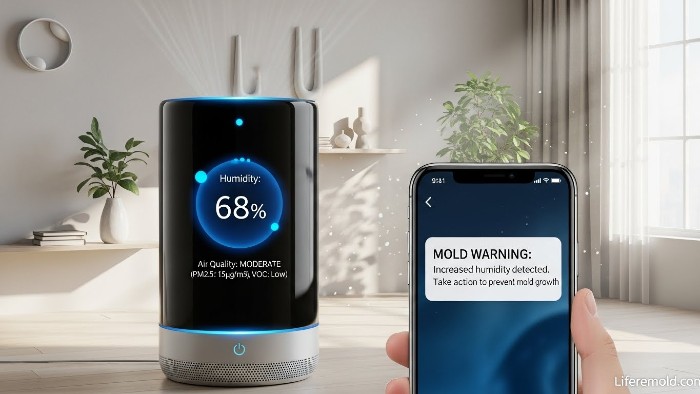
Smart Home Sensors
Modern sensors perform continuous monitoring of the humidity. They raise an alarm about the hazardous amounts. Some have links to smartphone apps.
These devices range from $30 – $100 usually. They provide peace of mind. Early warning is preferable to being discovered late.
Air Quality Monitors
Advanced monitors detect different particles. Some identify mold spores in particular. They give readings that are in real time.
Professional grade units are costly. General monitoring is fairly accurate using consumer models.
Thermal Imaging
Infrared cameras show variations in temperature. Moisture usually causes thermal differences. This technology is used to find hidden problems of water.
Rental is available in case you can’t afford to buy. One inspection may uncover several problems.
For those interested in health tracking and monitoring, how long does it take semaglutide explores how modern approaches to health monitoring work.
Special Situations and Mold Smell
Some situations demand special attention. Let’s deal with some special situations that we encounter often.
Historic Homes
Older homes are a unique situation. Original materials may be porous. Often ventilation systems are inadequate. The points of intrusion of moisture are multiplied over decades.
With that said, old house smell is not unavoidable. Proper maintenance is a way to prevent mold. Historic homes may be healthy homes.
Flood Damage Recovery
Mold may also develop after 24-48 hours after the flooding. Speed matters tremendously.
- Eliminate standing water as soon as possible.
- Dry everything possible
- Concrete and soak up water Review: Discard soaked porous materials
- Be forceful with fans and dehumidifiers.
- Follow-up during weeks with smell.
New Construction
Surprisingly, new homes may have mold. Building materials do get wet when construction is underway. Problems are caused by inadequate drying.
Do not think novel mold-free. New home smell may cover up mold smell. Not even in a newly built property.
Rental Properties
Renters are faced with unique challenges. You have no control of maintenance. You can’t make major repairs.
Document thoroughly. Communicate in writing. Understand your lease terms. Be familiar with the laws of habitable states in your state.
For those that deal with daily stress, you do this every morning talks about routines that affect your wellbeing.
Natural Approaches to Fresh Indoor Air
Other than mold remediation, fresh air is important. A number of natural approaches are helpful.
Ventilation Strategies
Fresh air exchange at regular intervals helps in reducing the mustiness. Open the windows if the weather is favorable. Use fans to create airflow. operate exhaust fans in the showers and after showers.
Indoor Plants
Some plants help filter air. NASA research supports this. Nevertheless, do not overwater it, that is how mold forms.
Good options include:
- Peace lily
- Spider plant
- Boston fern
- English ivy
Natural Deodorizers
Some of the natural substances absorb odors:
- Activated charcoal
- Baking soda
- White vinegar bowls
- Coffee grounds
These help the mustiness in general. But, they do not solve actual problems of mold. Address root causes first.
For one that explores traditional fermented beverages that have possible benefits, honey wine and mead.
When to Involve Medical Professionals
Health symptoms caused by mold require the attention of a physician. Look down on intractable problems.
Symptoms Requiring Evaluation
See physician when you have:
- Chronic respiratory issues
- Unexplained fatigue
- Recurring sinus infections
- New or worsening allergies
- Persistent headaches
- Cognitive difficulties
What to Tell Your Doctor
Be particular with regards to your concerns:
- Describe the smell of the mold and when did you notice it
- Record the presentation of symptoms of the document.
- Indicate whether the symptoms get better when not at home.
- Explain any visible discoveries of mold
Specialist Referrals
Some cases require the services of specialists:
- Allergy testers- Allergists.
- Respiratory problems – Pulmonologists for respiratory problems
- Complex cases Environmental medicine specialists
For people coping with health procedures and recovery, cataract surgery guide offers insights on the management of health treatments.
The Psychological Impact of Living with Mold
This is something to be recognized. It is a stressful way of living with mold. The anxiety is real and valid.
Common Emotional Responses
The individuals who live in mold experience the following:
- Frustrated by problems that do not go away
- Fears health consequences.
- Overwhelming costs of remediation
- Helpless when problems arise repeatedly
- Angry at the landlords or former owners
Coping Strategies
Control of stress helps along with the remediation:
- Take action – it helps to take away the helplessness
- Learn about facts on real risks.
- Connect with others that have experienced mold
- Focus on what you can control
- Praise little achievements of remediation.
Final Thoughts on Identifying Mold by Smell
Understanding what does mold smell like empowers you. Your nose is a good early warning system. Trust it.

Remember these key points:
- Musty earthy smells indicative of the presence of mold
- Different locations, different species – which have different smells
- What does mold smell like in a house depends on location and conditions
- What is the smell of black mold- smells like strongly musty, however, smell alone is not a guarantee of species.
- What does mold smell like in a bathroom–often sour and damp
- The prevention of illness prevents finances and lives.
- It is sometimes necessary to have professional help
- Prevention is better than remediation each and every time
Do not overlook the odours that are suspicious. Investigate them. Address them. Your home should not smell musty, but fresh.
Take action today. Check those hidden corners. Sniff around problem areas. It will pay off to your future self.
Frequently Asked Questions
A: No. Minimal amounts or focal growth can be odorless. Some people also experience decreased sensitivity of smell.
A: Airways may be irritated by the MVOCs responsible of smell. Prolonged exposure may cause health effects on the part of sensitive individuals.
A: Growth of molds is active, and results in smell in a few days to weeks. Factors include the moisture level, temperature and mold species.
A: No. Air freshener is just a temporary mask of smell. It fails to deal with the root cause of the mold issue.
A: Yes. The humidity fluctuations influence MVOC release. You may be more likely to smell it in the humid seasons or in case of heating/cooling systems changes.