 Skip to content

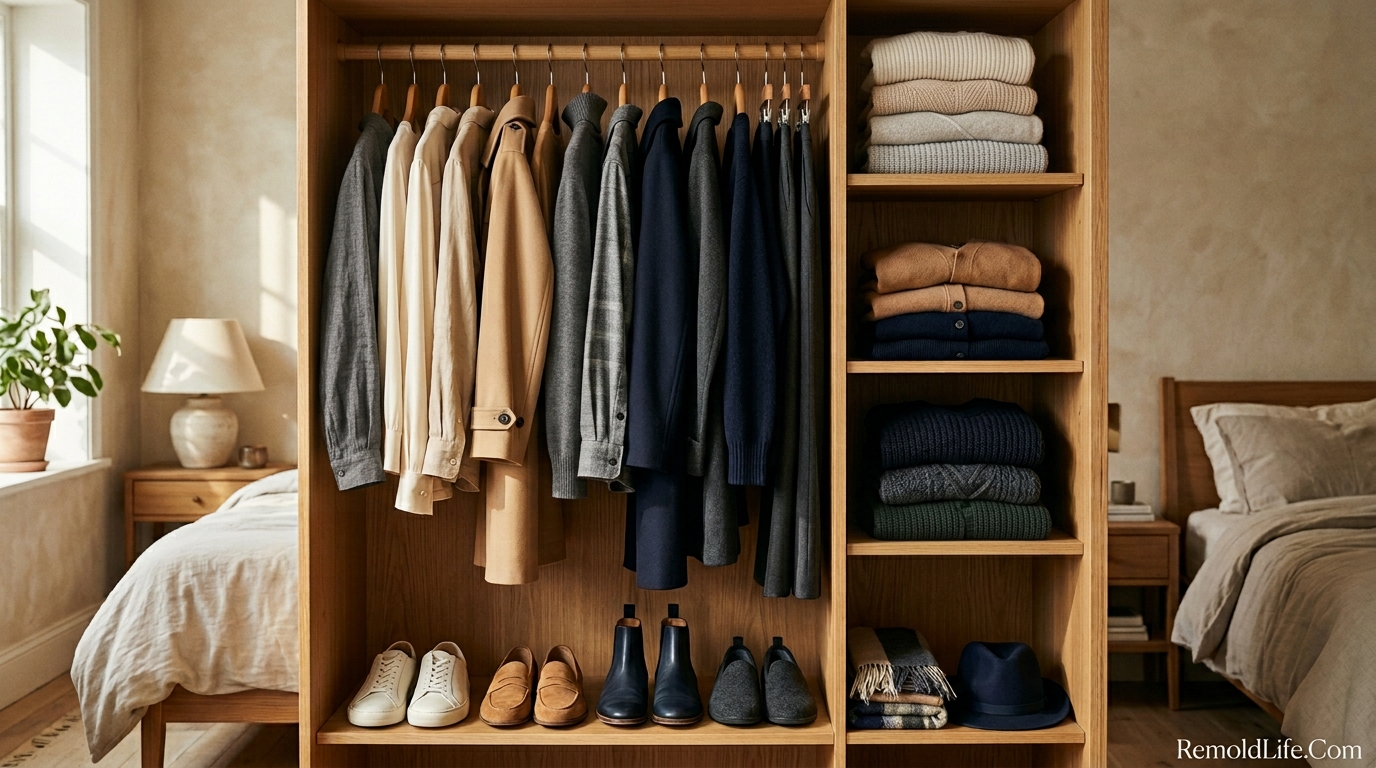

Learning how to create a capsule wardrobe appeals to people for different reasons — some want to reduce the daily friction of deciding what to wear, others want to spend less on clothing over time, and others are drawn to the broader simplicity that a smaller, more intentional wardrobe represents. All of these are legitimate motivations, and a well-built capsule wardrobe genuinely delivers on each of them.
A capsule wardrobe is a curated, limited collection of clothing items — typically 25–50 pieces depending on the approach — chosen specifically because they work well together, fit your actual life, and eliminate the closet full of items that don’t get worn. This guide covers how to build one that actually works for your life, not just one that looks good in a blog post photo.
What a Capsule Wardrobe Actually Solves
Before getting into the how, it’s worth being clear about what problem this is solving, because it shapes the approach.
Decision fatigue. Research on decision fatigue — the documented decline in decision quality after a long series of choices — applies directly to daily wardrobe decisions. A smaller, intentional wardrobe where every piece works with several others removes the daily friction of standing in front of a closet full of options that don’t quite go together.
The “nothing to wear” paradox. Many people with full closets still feel they have “nothing to wear” — a phenomenon that reflects mismatched pieces, items that don’t fit current life or body, and pieces bought for an idealized version of life that doesn’t match reality, rather than an actual shortage of clothing.
Cost over time. A wardrobe built around versatile, quality pieces that get worn regularly costs less per wear than a larger wardrobe of cheaper items that get worn rarely — even though the upfront cost per item may be higher.
Closet clutter and the mental weight of “should.” A closet full of items that don’t fit, aren’t worn, or represent an aspirational identity rather than your actual life creates ongoing low-level mental friction every time you open it.

Step 1: Audit Your Current Wardrobe Honestly
Before building a capsule wardrobe, understand what you actually have and how you actually live.
Track what you wear for two to four weeks. Without changing anything yet, simply notice what you reach for repeatedly and what stays untouched. This reveals your actual patterns more reliably than any theoretical planning.
Sort everything into clear categories:
- Worn regularly and genuinely loved
- Worn occasionally but functional
- Rarely or never worn
- Doesn’t fit your current body, life, or style
- Damaged or worn out
Be honest about your actual life — not your aspirational one. A capsule wardrobe built around the social life, work environment, and climate you actually have will get used. One built around the life you imagine you might have (more formal events, more athletic activities, more travel) tends to accumulate unused items just like a regular wardrobe does.
Step 2: Identify Your Personal Style Parameters
A functional capsule wardrobe requires some clarity about what you actually like to wear and what makes you feel good — not what’s trending or what looks good on someone else.
Color palette: Most successful capsule wardrobes are built around a limited, coordinated color palette — typically 2–4 neutral base colors (black, navy, gray, beige, white) plus 1–3 accent colors that you genuinely like and that work with your skin tone and the rest of the palette. This is the single factor that does the most work in ensuring pieces mix and match effectively.
Silhouettes that work for your body and comfort: Rather than following trends, identify the cuts, fits, and styles that you’ve consistently felt good in — this is more reliable information than current fashion direction.
Your actual lifestyle needs: A breakdown of how your time is actually spent (work environment, exercise, social occasions, climate) determines what categories of clothing you genuinely need, in what proportions.
Step 3: Determine Your Category Breakdown
A capsule wardrobe isn’t randomly assembled — it’s built around the categories that match your actual life, in proportions that reflect how you actually spend time.
Example breakdown for someone with an office job, moderate social life, and regular exercise:
| Category | Approximate Pieces |
|---|---|
| Tops (shirts, blouses, sweaters) | 10–12 |
| Bottoms (pants, skirts) | 5–7 |
| Dresses (if applicable) | 2–4 |
| Outerwear | 3–4 |
| Shoes | 4–6 |
| Athletic wear | 4–6 |
| Loungewear/sleepwear | Separate from capsule count |
| Formal/occasion wear | 1–2 (depending on need) |
This is illustrative — the actual breakdown should reflect genuine assessment of your life, not a generic template. Someone who works from home and rarely attends formal events needs a very different breakdown than someone with frequent professional and social obligations.
Step 4: Select Pieces Based on Versatility, Not Just Individual Appeal
This is the step most people get wrong when first attempting a capsule wardrobe — selecting pieces because they’re individually appealing, without considering how they integrate with everything else.
The mix-and-match test: Before adding any piece, consider how many other pieces in the wardrobe it could realistically be worn with. A genuinely versatile piece should work with at least 3–4 others. A piece that only works with one specific item isn’t capsule-appropriate, however much you like it individually.
Quality over quantity within your budget. Because a capsule wardrobe gets worn more frequently per item than a larger wardrobe, investing in better quality (within reason, based on your actual budget) for the pieces that will see the most wear — typically basics like well-fitting pants, quality outerwear, and reliable shoes — pays off through durability and consistent appearance.
Fit matters more than almost anything else. A capsule wardrobe of well-fitting basic pieces looks and feels better than a wardrobe of trendy but ill-fitting items. If budget allows, tailoring a few key pieces (hemming pants, adjusting a blazer) makes a meaningful difference in how the whole wardrobe functions and feels.

Step 5: Build In Seasonal Flexibility
A pure capsule wardrobe concept (one set of pieces, unchanging) doesn’t work well for most climates with genuine seasonal variation. A practical adaptation:
Seasonal core + rotating layer system: Maintain a core capsule of versatile pieces that work across seasons (well-fitting pants, basic tops, a few key dresses), and rotate in season-specific items (heavier sweaters and coats for winter, lighter fabrics for summer) on a seasonal basis, storing the off-season items rather than keeping everything accessible simultaneously.
This approach maintains the benefits of a capsule wardrobe (reduced decision fatigue, intentional curation) while accommodating genuine climate needs without forcing an unrealistic year-round single wardrobe.
Step 6: Address What You’re Removing
Building a capsule wardrobe inevitably means removing items from your current wardrobe — and how you handle this matters for both practical and psychological reasons.
Don’t discard everything immediately. For items you’re uncertain about, a “maybe box” stored for a defined period (3–6 months) lets you test whether you genuinely miss anything before committing to permanent removal.
Responsible disposal options:
- Donation to organizations that genuinely use or resell clothing (check that your local donation center actually distributes rather than landfills excess donations)
- Consignment or resale through platforms like Poshmark, ThredUp, or local consignment shops for higher-quality items
- Clothing swaps with friends or community groups
- Textile recycling for items too worn for donation (many brands and some municipalities offer textile-specific recycling)
Avoid the trap of guilt-driven retention. Items kept because they were expensive, given as gifts, or represent a past or aspirational identity create ongoing psychological weight without functional value. The cost is already sunk regardless of whether you keep the item — keeping it doesn’t recover the cost, it just continues to occupy space and mental energy.
Common Capsule Wardrobe Mistakes
Building it around someone else’s aesthetic. Capsule wardrobe templates and “What I wear in a capsule wardrobe” content can be useful for inspiration but become problematic when followed too literally rather than adapted to your actual style preferences and life.
Being too restrictive too quickly. Going from a large wardrobe to an extremely minimal one in one dramatic purge often results in either reversing the decision quickly or feeling genuinely under-resourced for actual life needs. A more gradual transition — removing clearly unused items first, then refining over several months — tends to produce more sustainable results.
Ignoring your actual climate and life events. A capsule wardrobe that doesn’t account for your specific climate, work requirements, or genuine social obligations will fail to actually function, regardless of how aesthetically coherent it is.
Treating it as permanent and static. A capsule wardrobe should evolve as your life, body, and style preferences change. Treating the initial selection as permanent, rather than revisiting it periodically, eventually recreates the same mismatch between wardrobe and actual life that prompted the capsule approach in the first place.
Maintaining a Capsule Wardrobe Long-Term
The one-in-one-out principle. Once established, maintaining a capsule wardrobe’s benefits requires discipline about additions — when something new comes in, something comparable typically goes out, preventing gradual re-accumulation.
Periodic review. A seasonal check-in — does everything still fit, still feel good, still serve your actual life — keeps the capsule responsive to genuine changes rather than becoming an outdated, rigid system.
Resist trend-driven additions. The capsule wardrobe concept works specifically because it resists the constant cycle of trend-driven purchases. Maintaining this requires some discipline against marketing and social pressure to continuously add new items.
Frequently Asked Questions
There’s no single correct number — common approaches range from roughly 25 to 50 pieces (not counting underwear, loungewear, or accessories), but the right number depends entirely on your actual life complexity, climate, and personal preferences. The goal isn’t hitting a specific number; it’s having a wardrobe where everything works together and gets worn.
Often yes, over time — though the upfront cost of building one (particularly if you’re investing in better quality basics) can be higher than continuing with a larger, lower-cost wardrobe. The savings come from cost-per-wear being significantly lower for pieces that are actually worn regularly, and from reduced impulse purchases once the wardrobe is well-established and functioning.
Yes, with adaptation — the category breakdown simply needs to reflect more occasion-specific pieces than someone with a quieter lifestyle would need. The principle of intentional curation and mix-and-match versatility still applies; it’s the specific category proportions that should adjust to genuine lifestyle demands.
Start with what you already own — the audit process in Step 1 often reveals more usable pieces than expected. For new additions, prioritize secondhand options (thrift stores, consignment, resale platforms) for the pieces you need, and focus new spending on the few items that will see the most wear and benefit most from quality (typically well-fitting pants and reliable outerwear).
A capsule wardrobe is meant to evolve, not remain fixed permanently. As your style, body, or life circumstances genuinely change, revisiting and adjusting the capsule (gradually, not necessarily all at once) maintains its usefulness. The principles — intentional curation, versatility, fit with actual life — remain useful even as the specific pieces change.

Final Thoughts
A capsule wardrobe isn’t about extreme minimalism or owning as few items as possible — it’s about owning the right items, intentionally selected to work together and match your actual life, rather than accumulating clothing reactively over time. The result is less daily decision fatigue, generally lower long-term cost, and a closet that reflects genuine use rather than aspiration or accumulation.
The process takes real time and honest self-assessment — particularly the audit step — but the resulting simplicity tends to be one of the more sustainable lifestyle changes people make, precisely because it addresses a daily, recurring point of friction.
For related reading, how to declutter your home covers the broader decluttering principles that apply to wardrobe simplification, and how to simplify your life addresses the daily decision-reduction philosophy that a capsule wardrobe exemplifies in one specific area.
Sources:
- American Psychological Association — Decision Fatigue Research: https://www.apa.org/
- Council for Textile Recycling — Clothing Disposal and Recycling Data: https://www.weardonaterecycle.org/
- Environmental Protection Agency — Textiles Material-Specific Data: https://www.epa.gov/facts-and-figures-about-materials-waste-and-recycling/textiles-material-specific-data
- Schwartz B — The Paradox of Choice (2004) — Choice Overload Research

Finn Larsen is a content writer covering health, lifestyle, relationships, and
personal finance. Articles published under this name are written for general
informational purposes to help everyday readers find clear, straightforward
answers to common questions.