 Skip to content

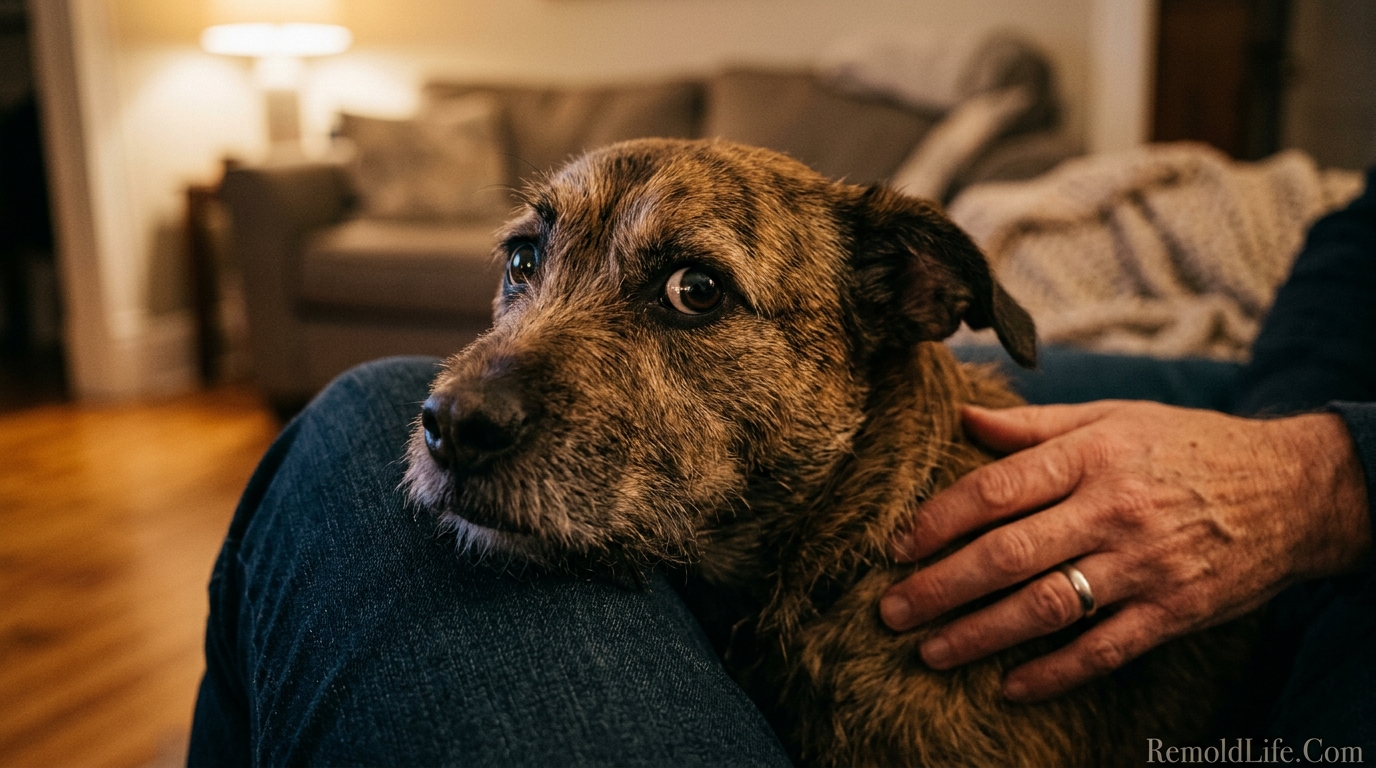

Learning how to help an anxious dog starts with recognizing that anxiety in dogs isn’t simply “bad behavior” — it’s a genuine emotional and physiological state, similar in many ways to anxiety in humans. A dog that’s destroying furniture while you’re out, panting and pacing during storms, or unable to settle in new environments isn’t being defiant. They’re experiencing real distress.
The encouraging news is that canine anxiety is one of the more researched and treatable areas of dog behavior. This guide covers how to recognize anxiety, the most common types and their causes, and the approaches — behavioral, environmental, and sometimes medical — that actually help.
Recognizing Anxiety in Dogs
Dogs communicate distress primarily through body language and behavior, and these signs are often subtle enough to be missed or misinterpreted.
Physical Signs
- Panting when not hot or after exercise
- Trembling or shaking
- Excessive drooling
- Dilated pupils
- Pacing or restlessness
- Whale eye (showing the whites of the eyes)
- Ears pinned back or held low
- Tail tucked
Behavioral Signs
- Excessive licking — of themselves, furniture, or the air
- Destructive behavior, particularly when alone
- Vocalization — whining, barking, or howling, especially when alone or during specific triggers
- Hiding or seeking constant proximity to their owner
- Loss of appetite, especially in new or stressful environments
- House-soiling despite being house-trained
- Hypervigilance — constantly scanning the environment
Avoidance and Displacement Behaviors
- Yawning when not tired
- Sudden intense interest in sniffing the ground (a self-soothing displacement behavior)
- Shaking off as if wet, when dry — often after a stressful interaction
- Freezing in place
Recognizing these signs in context — what’s happening when they occur — is the first step toward understanding what’s driving the anxiety.
Common Types of Anxiety in Dogs
Separation Anxiety
Separation anxiety occurs when a dog becomes distressed specifically when separated from their owner or left alone. It’s one of the most commonly diagnosed behavioral issues in dogs, and research published by the American Veterinary Society of Animal Behavior (AVSAB) estimates it affects a significant proportion of dogs to varying degrees.
Key signs that distinguish separation anxiety from other issues: the behavior occurs specifically when the dog is left alone or separated from their attachment figure, often begins within minutes of departure, and may include behaviors that seem specifically aimed at escape (damage concentrated around doors and windows) or distress (excessive vocalization, house-soiling despite being house-trained).
Noise Phobias (Storms, Fireworks)
Many dogs develop intense fear responses to loud or sudden noises — thunderstorms, fireworks, construction sounds. Unlike separation anxiety, this is triggered by the specific stimulus regardless of whether the owner is present, though dogs often seek out their owner during these episodes for comfort.
Storm phobia in particular can involve more than just sound — dogs may also be responding to changes in barometric pressure, static electricity buildup (which is why some dogs seek out bathrooms or seem to seek “grounding”), and visual flashes of lightning.
Generalized Anxiety
Some dogs show persistent anxious behavior across many contexts, without a single clear trigger — a generally heightened state of alertness, difficulty settling, and reactivity to a wide range of stimuli. This can result from genetics, early life experiences (including inadequate socialization during the critical developmental window), or chronic stress.
Social Anxiety / Fear of Unfamiliar People or Dogs
Some dogs experience significant distress around unfamiliar people, dogs, or environments — often rooted in inadequate socialization during puppyhood (the critical window is roughly 3–14 weeks), a negative experience, or genetic temperament factors.
Situational Anxiety
This includes anxiety tied to specific, recurring situations: car rides, vet visits, grooming, or specific locations associated with past negative experiences.

Why Dogs Develop Anxiety
| Factor | How It Contributes |
|---|---|
| Inadequate early socialization | The critical socialization window (roughly 3–14 weeks) shapes lifelong responses to novel people, animals, and environments |
| Genetics | Some breeds and individual lines show higher baseline anxiety tendencies |
| Traumatic experiences | A single intense negative experience can create lasting fear associations |
| Changes in routine or environment | Moving homes, new family members, schedule changes |
| Medical conditions | Pain, hormonal imbalances (e.g., hyperthyroidism), and certain neurological conditions can present as or worsen anxiety |
| Aging | Cognitive decline in senior dogs (canine cognitive dysfunction) often presents with increased anxiety, especially at night |
| Lack of mental and physical stimulation | Under-stimulated dogs often develop anxiety-related behaviors as an outlet |
Understanding the likely source of a dog’s anxiety helps target the right approach — separation anxiety and noise phobia, for example, respond to quite different strategies.
What Actually Helps: Evidence-Based Approaches
1. Desensitization and Counter-Conditioning
This is the foundation of most effective anxiety treatment in dogs, and it’s the approach most consistently supported by veterinary behaviorists.
Desensitization means gradually exposing the dog to a milder version of whatever triggers their anxiety — at an intensity low enough that they don’t react fearfully — and slowly increasing exposure over time as the dog remains calm.
Counter-conditioning means pairing that exposure with something positive — high-value treats, play, or anything the dog genuinely enjoys — so the dog’s emotional association with the trigger gradually shifts from fear to something more neutral or positive.
Example for separation anxiety: Instead of leaving for hours immediately, practice leaving for very short periods (seconds to a couple of minutes) while the dog remains calm, gradually increasing duration over many sessions — often over weeks — while ensuring the dog doesn’t reach a point of distress during the process.
Example for noise phobia: Playing recordings of thunder or fireworks at very low volume during calm, positive activities (mealtime, play), gradually increasing volume over many sessions as the dog remains relaxed.
This process is genuinely gradual — rushing it (exposing the dog to a level of the trigger that produces a fear response) can worsen the association rather than improve it. Working with a certified applied animal behaviorist or veterinary behaviorist is valuable for more severe cases, as the pacing and technique matter significantly.

2. Predictable Routines
Dogs find unpredictability stressful. A consistent daily routine — feeding times, walks, and a predictable departure/return pattern from the household — provides a sense of security that reduces baseline anxiety.
This doesn’t mean rigid schedules are required forever, but during periods of working on anxiety specifically, predictability reduces the “unknown” factor that can compound existing anxiety.
3. Adequate Physical and Mental Exercise
A tired dog — in both body and mind — has a different baseline anxiety threshold than an under-stimulated one. This isn’t a cure for anxiety on its own, but it’s a foundational piece.
Physical exercise appropriate to the dog’s age, breed, and health supports overall stress regulation.
Mental stimulation — puzzle toys, scent work, training sessions, new environments to explore (within the dog’s comfort level) — provides a different kind of fatigue that many anxious dogs specifically benefit from, since mental engagement can reduce the “spare capacity” that anxious rumination otherwise occupies.
4. Creating a Safe Space
Many dogs benefit from having a specific, designated safe space — a crate (if positively associated, never used as punishment), a covered bed in a quiet corner, or a specific room — where they can retreat when feeling overwhelmed.
For this to function as a genuine safe space rather than another source of stress, the dog needs to have positive associations with it built up before it’s needed during an anxious episode — through gradual, positive introduction (feeding there, comfortable bedding, never forcing the dog into it).
5. Calming Aids and Products
Several products have research support for mild-to-moderate anxiety:
- Pheromone diffusers (Adaptil) — synthetic versions of calming pheromones; some research supports modest anxiety reduction, particularly for situational stress
- Anxiety wraps/compression garments (ThunderShirt) — gentle, constant pressure has calming effects for some dogs, similar in concept to swaddling; evidence is mixed but many owners report benefit with minimal downside
- Calming supplements — products containing L-theanine, alpha-casozepine, or melatonin have some research support for mild anxiety; always discuss with your vet before starting, particularly if your dog takes other medications
These tools work best as part of a broader approach — they’re rarely sufficient on their own for moderate-to-severe anxiety, but they can meaningfully support other interventions.

6. Veterinary Behavioral Medicine
For moderate to severe anxiety — particularly separation anxiety that involves significant distress, self-injury, or anxiety that hasn’t responded to behavioral approaches — veterinary-prescribed medication can be appropriate.
Medications such as fluoxetine or clomipramine (both used for canine anxiety under veterinary guidance) work by addressing the underlying neurochemistry of anxiety, often making the dog more responsive to behavioral training that wasn’t effective when anxiety levels were too high for learning to occur.
The American College of Veterinary Behaviorists notes that medication and behavioral modification work best in combination — medication can lower the anxiety “ceiling” enough that behavioral techniques become effective, rather than replacing them.
What to Avoid
Punishment for anxiety-driven behavior. Destructive behavior, house-soiling, or vocalization that results from anxiety is not defiance — punishing it doesn’t address the underlying emotional state and can increase overall anxiety, sometimes worsening the behavior or creating new fear associations (including fear of the owner).
Forced exposure (“flooding”). Forcing a dog to endure a feared situation at full intensity, hoping they’ll “get over it,” is more likely to intensify the fear response and can create or worsen trauma-related anxiety.
Excessive, anxious owner reactions. Dogs are highly attuned to their owners’ emotional states. An owner who becomes visibly anxious during departures (in the case of separation anxiety) or during storms can inadvertently reinforce the dog’s sense that something concerning is happening.
Crating as punishment. A crate used as a place of confinement following misbehavior — rather than a positively-associated safe space — typically becomes a source of anxiety itself rather than a tool for managing it.

When to See a Veterinarian or Behaviorist
A veterinary visit is warranted when:
- Anxiety appears suddenly in a previously calm dog (this can indicate an underlying medical issue, including pain)
- Anxiety is severe enough to cause self-injury (excessive licking causing wounds, escape attempts causing injury)
- The anxiety significantly impacts quality of life — for the dog or the household
- Behavioral approaches alone haven’t produced improvement after a reasonable, consistent effort
Your regular vet can rule out medical contributors and may refer you to a veterinary behaviorist — a vet with additional specialized training in behavior — for more complex cases. Certified applied animal behaviorists (non-veterinary credential, but rigorous training) are another resource, particularly for cases that don’t require medication.
Frequently Asked Questions
Generally no — anxiety that isn’t addressed tends to persist or worsen over time, particularly because anxious behaviors that get reinforced (even unintentionally) tend to become more entrenched. Early intervention, while a dog’s anxiety is mild, is significantly easier than addressing severe, long-standing anxiety.
Usually not — separation anxiety is specifically about separation from the owner (or attachment figure), not about being alone in general. A second dog doesn’t address this and can sometimes create additional management complexity. In some cases it can help with general loneliness-related issues, but it’s not a reliable fix for true separation anxiety and shouldn’t be the primary intervention.
This varies enormously depending on the severity of the anxiety and consistency of the approach — mild cases might show improvement within a few weeks, while moderate-to-severe separation anxiety often takes months of consistent, gradual work. Rushing the process tends to set back progress, so patience genuinely matters here.
Some breeds and lines show higher documented rates of anxiety-related behaviors — often breeds developed for close working relationships with humans (which can predispose to separation-related issues) or breeds with generally higher reactivity. However, individual variation within any breed is substantial, and early experiences and environment play a major role regardless of breed tendencies.
There’s emerging interest in the gut-brain connection in dogs, similar to research in humans, though the evidence base specifically for diet-anxiety links in dogs is still developing. Ensuring a nutritionally complete diet (as covered in how to choose the right dog food) supports overall health, which indirectly supports a dog’s capacity to cope with stress — but diet alone isn’t considered a primary treatment for diagnosed anxiety conditions.

Final Thoughts
An anxious dog isn’t a “bad” dog, and the behaviors that come with anxiety — destruction, vocalization, house-soiling, avoidance — aren’t choices made out of spite. They’re expressions of genuine distress, and they respond to the same general principles that help with anxiety in many contexts: gradual, positive exposure rather than forced confrontation, predictability, adequate stimulation, and — when needed — professional support including veterinary behavioral medicine.
Patience matters enormously here. Anxiety that’s developed over months or years doesn’t resolve in days, but consistent, well-paced approaches genuinely do help most dogs — often dramatically.
For related pet health content, how to keep a dog healthy covers the broader daily care picture that supports a dog’s overall wellbeing, and common cat health problems addresses similar recognition-and-response principles for cat owners.
Sources:
- American Veterinary Society of Animal Behavior — Separation Anxiety in Dogs: https://avsab.org/
- American College of Veterinary Behaviorists — Anxiety Disorders in Companion Animals: https://www.dacvb.org/
- American Veterinary Medical Association — Canine Behavior Resources: https://www.avma.org/
- Overall KL — Manual of Clinical Behavioral Medicine for Dogs and Cats (2013)
- ASPCA — Separation Anxiety Guidance: https://www.aspca.org/

Finn Larsen is a content writer covering health, lifestyle, relationships, and
personal finance. Articles published under this name are written for general
informational purposes to help everyday readers find clear, straightforward
answers to common questions.